





AI is everywhere, but running it isn't free. The ongoing expense of using a trained AI model, known as inference, is now the largest AI cost for most companies. The 'formula' for this cost isn't simple, but it boils down to four key parts.
GPUs: The Price of Raw Power
At the heart
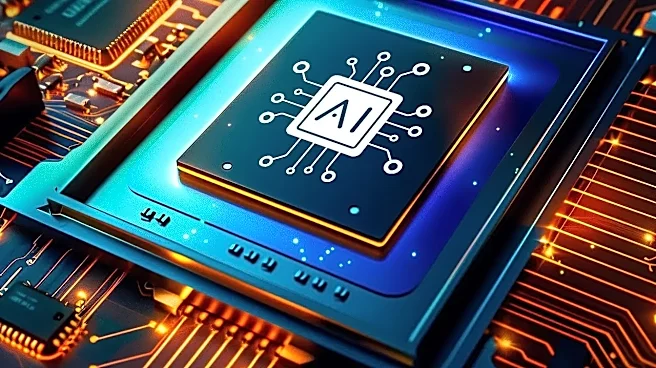
of AI inference is the Graphics Processing Unit (GPU). Originally designed for video games, these chips are exceptionally good at the parallel calculations AI models require. Think of them as the engines of the AI world. The primary cost here is straightforward: these chips are expensive, with top-tier enterprise GPUs costing tens of thousands of dollars. But the spending doesn't stop at the purchase price. These powerful components consume a significant amount of electricity, adding a continuous operating expense. The specific GPU a company needs is determined by the model it wants to run; a larger, more complex model requires a more powerful and costly GPU. Choosing the right one is the first and often biggest factor in the cost equation.
Memory: The Data Superhighway
A powerful GPU is useless if it’s starved for data. That’s where memory comes in, but it’s not just about the amount of memory (VRAM) a GPU has. The critical factor is memory bandwidth—how fast data can move between the memory and the processing cores. Imagine a factory (the GPU cores) that can assemble products at lightning speed. If the conveyor belt (the memory bandwidth) bringing parts is slow, the factory sits idle waiting for materials. High-bandwidth memory (HBM) is the superhighway that allows massive AI models to access their parameters and user data instantly. If the memory can't keep up, the entire process slows down, making every calculation more expensive. For many AI workloads, performance is limited by this memory bottleneck, not by raw computing power.
Latency: The Cost of a Slow Response
Latency is the delay between a user's request and the AI's response. In the context of a chatbot or a generative AI tool, it’s the time you spend waiting for the answer to appear. While not a direct hardware cost, latency has a huge business impact. A slow, laggy AI assistant frustrates users, who may abandon the service. For real-time applications like fraud detection or autonomous systems, high latency can render the system useless. Companies can invest in more powerful hardware or more server locations to reduce this delay, but that directly increases costs. This creates a constant trade-off: is a faster response worth the higher price? The answer depends entirely on the application, forcing businesses to balance user experience against their budget.
Utilization: The Idle Engine Problem
Perhaps the most overlooked factor is utilization—the percentage of time a GPU is actually doing useful work. A GPU has a fixed hourly cost whether it's running at full tilt or sitting completely idle. Low utilization is a massive source of wasted money. If a company pays for a dedicated GPU that only receives requests 25% of the time, its effective cost per answer quadruples. To combat this, companies use strategies like 'batching', where multiple user requests are grouped together and processed at once to keep the GPU busy. However, batching can increase latency, as some users have to wait for the batch to fill. Achieving high utilization without hurting the user experience is one of the biggest operational challenges in making AI economically viable at scale.