
The House That Silicon Built
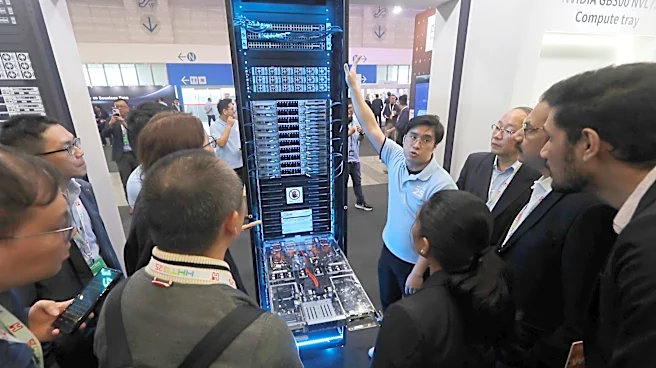
First, let's give the hardware its due. Nvidia's graphics processing units (GPUs) are the undisputed champions of accelerated computing. For years, their blistering performance made them essential for high-end
PC gaming. Then, researchers discovered that the same architecture designed to render realistic graphics was perfect for the parallel processing required by artificial intelligence. This discovery turned Nvidia from a successful gaming company into the foundational engine of the AI economy. Recent earnings reports show a company firing on all cylinders, with Data Center revenue—where its AI chips live—skyrocketing past all other segments. The demand for its silicon is so immense that it has essentially become the primary infrastructure provider for the current AI boom.
The Secret Weapon Hiding in Plain Sight
The hardware is only half the story. The secret ingredient that makes Nvidia's empire so difficult to challenge is a piece of software called CUDA (Compute Unified Device Architecture). Introduced way back in 2007, CUDA is a software platform that allows developers to unlock the massive parallel processing power of Nvidia's GPUs for general-purpose tasks. For years, Nvidia invested heavily in building out the CUDA ecosystem, giving it away for free and training a generation of developers and scientists on how to use it. This created a powerful lock-in effect: millions of developers are now fluent in CUDA, and the most important AI frameworks are optimized to run on it. Switching to a competitor's chip isn't just a matter of swapping hardware; it would require rewriting years of code, a costly and painful process most are unwilling to undertake.
From Free Tools to Paid Platforms
For a long time, the CUDA strategy was simple: give the software away to sell more high-margin hardware. That's now changing. Nvidia is building on its CUDA foundation to create a new, lucrative software business. The company is now offering sophisticated, cloud-native software suites like NVIDIA AI Enterprise. This is a fully supported, production-ready package of tools, libraries, and frameworks that helps businesses develop and deploy their own AI applications securely and efficiently. Think of it as moving from providing a free, powerful engine (CUDA) to selling a complete, enterprise-grade vehicle with a service and support contract (NVIDIA AI Enterprise). This creates a direct revenue stream from software, moving beyond the one-time sale of a GPU.
The Power of Recurring Revenue
Wall Street loves software for one simple reason: recurring revenue. Unlike hardware sales, which can be cyclical and dependent on product launches, software sold via subscription provides a steady, predictable stream of income with much higher profit margins. By selling licenses and subscriptions to platforms like AI Enterprise and its digital twin simulation platform, Omniverse, Nvidia is adding a new dimension to its financial profile. While Omniverse has yet to become a major revenue driver, it represents a long-term bet on industrial digitalization. Analysts note that these strategic software initiatives are becoming increasingly critical to the company's valuation, turning it from a chip supplier into a full-stack platform company with multiple ways to monetize its dominance in AI.
Building an Unbreachable Moat
Ultimately, the software story isn't just about adding a new revenue line. It's about building a competitive moat that is nearly impossible for rivals to cross. Even if a competitor manages to design a marginally better or cheaper chip, they face the monumental task of replicating the two decades of development and community adoption behind CUDA. By integrating hardware and software into a full-stack platform, Nvidia can deliver system-level performance and a total cost of ownership that component-focused competitors struggle to match. The software locks customers into the ecosystem, and the revenue from that software helps fund the next generation of hardware. It's a virtuous cycle that reinforces Nvidia's position at the center of the AI universe, making it not just a hardware company, but the architect of the entire AI factory.