




The Defensive Moat: Protecting the EV Throne
First, let's talk defense. For years, Tesla’s competitive edge wasn't just its batteries, but its software. Features like Autopilot and Full Self-Driving (FSD) are core to the brand's premium appeal and a key reason it could command higher prices. Now,
with nearly every major automaker rolling out competent electric vehicles, that edge is under threat. That’s where a huge chunk of its AI spending goes: a defensive play to keep its cars ahead of the pack. This investment is in the underlying compute power needed to process staggering amounts of real-world driving data, making its driver-assist features smarter and more capable. Improving these systems isn't a moonshot; it’s a necessity to protect the company's main source of revenue as competitors catch up. Think of it as reinforcing the castle walls. Tesla is spending billions on AI to ensure its cars remain perceived as the smartest on the road, defending its market share and brand prestige in an increasingly crowded field.
The Aggressive Gambit: Building New Empires
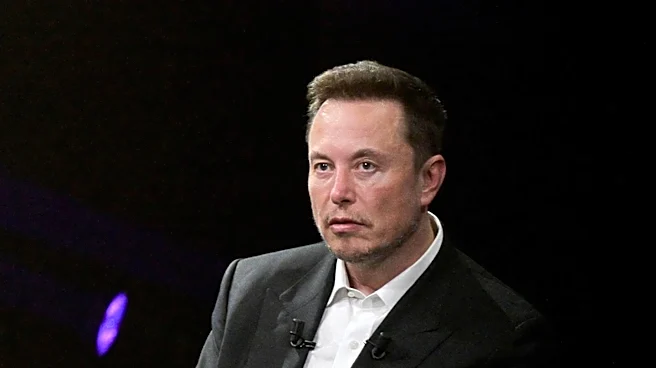
If defending the car business is one-half of the story, the other half is pure offense. Elon Musk confirmed Tesla will spend over $25 billion on capital expenditures this year, a massive increase aimed at ventures that have little to do with selling cars today. This is the aggressive side of the strategy. The spending is pouring into three futuristic, high-risk, high-reward projects: the Dojo supercomputer, the Optimus humanoid robot, and the Cybercab robotaxi network. Dojo is the custom-built AI brain powerful enough to potentially solve autonomous driving. Optimus aims to create a new market for humanoid labor. And the robotaxi fleet represents a shift from selling cars to selling autonomous rides—a potentially much more lucrative business. This spending explains the recent negative free cash flow, a metric that unnerves Wall Street. It’s a bet-the-farm move to create entirely new, multi-trillion-dollar markets from scratch, recasting Tesla less as a carmaker and more as an AI and robotics platform.
Why This Dual Strategy Breaks the Mold
Most public companies live in fear of a quarter like the one Tesla just had: missing profit estimates while burning cash. Investors typically reward one of two clear strategies: a 'value' approach that maximizes current profits (defensive) or a 'growth' approach that sacrifices profits for future expansion (aggressive). Trying to do both at once, at this scale, is almost unheard of. On the earnings call, Musk was unapologetic, stating Tesla should spend on capital expenditures "as fast as we can... without it being too wasteful." This breaks the conventional Wall Street story. Tesla is using the profits from its established, defensive car business to fund an incredibly expensive and aggressive pivot into a new industry. It’s a strategy that creates a fundamental tension: judging Tesla on its car business alone makes the spending look reckless, but judging it as an AI company makes the car business look like a funding mechanism for a much larger ambition.