




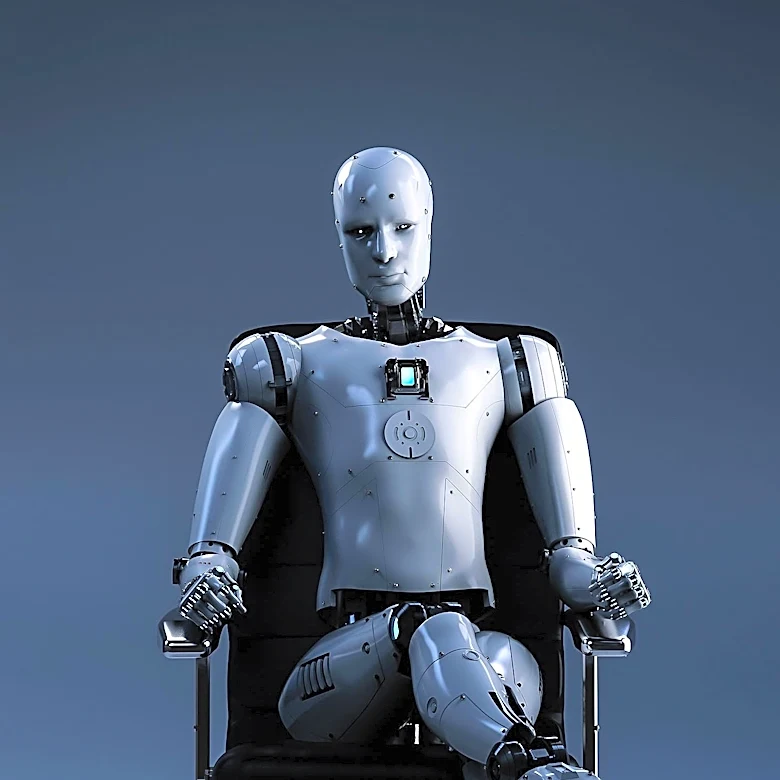


The AI We Usually Talk About
When most people, including many engineers, discuss AI, they are typically talking about performance. They mean the complex systems—often called machine learning models or neural networks—that are trained on vast amounts of data to perform specific tasks.
These systems are engineered to recognize patterns, predict outcomes, and generate human-like text or images. The goal is functional: build a machine that can accomplish a task that, if done by a human, would require intelligence. Success is measured by efficiency, accuracy, and the ability to produce a convincing result, whether that's winning a game of chess, diagnosing a medical image, or writing a piece of code. This practical, results-oriented focus defines the world of what is often called “Weak AI”—incredibly sophisticated simulation, but simulation nonetheless.
The Hidden Detail: Understanding vs. Mimicry
The detail that gets lost in the race for better performance is the distinction between mimicking intelligence and possessing genuine understanding. Current AI is a master of mimicry. A large language model doesn't "know" what a cat is; it knows which words and pixels are statistically associated with the word "cat" based on its training data. It predicts the most plausible response, it doesn't reason from a foundation of belief or consciousness. This is the core philosophical challenge that gets glossed over: we see behavior that looks like thinking, and we assume there is a thinker inside. However, there is a major gap between an output that seems intelligent and an internal process that is actually intelligent, a difference that has profound implications for how we build and trust these systems.
The Chinese Room and the Limits of Simulation
Philosopher John Searle devised a famous thought experiment in 1980 that perfectly captures this problem. It’s called the “Chinese Room” argument. Imagine a person who doesn't speak Chinese locked in a room. They receive Chinese characters slipped under the door and have a massive rulebook that tells them exactly which Chinese characters to send back out in response. To an outside observer, it looks like the person in the room is fluently conversing in Chinese. But is the person in the room actually understanding Chinese? Not at all. They are just manipulating symbols according to a program. Searle argued that this is exactly what computers running AI programs do. They process syntax (the rules for arranging symbols) without any grasp of semantics (the actual meaning behind the symbols). This thought experiment challenges the idea that a convincing simulation of intelligence is the same as real intelligence.
Why Engineers Might Skip This
The reason this distinction is often skipped in engineering circles isn't due to ignorance, but incentives. The primary job of an AI engineer is to build a system that works, solves a problem, and meets performance benchmarks. The focus is on the “what” (what can it do?) and the “how” (how can we make it better?), not the philosophical “is it actually thinking?” Whether the system “understands” poetry or just produces text that looks like a poem is secondary to the fact that it successfully generated the requested output. The engineering discipline is grounded in creating viable, trusted, and functional systems. Questions about consciousness, intentionality, and genuine understanding are often seen as abstract and not directly relevant to the immediate task of making a model more accurate or efficient.
The Real-World Stakes of the Distinction
Ignoring the difference between mimicry and understanding isn't just a philosophical indulgence; it has real-world consequences. When we over-trust AI in critical fields like medicine or law, we risk acting on outputs that are plausible but lack true comprehension, a phenomenon known as automation bias. An AI might generate a legal brief that sounds authoritative but misunderstands a key legal principle, or a medical diagnosis that connects symptoms statistically without grasping the patient's unique context. Furthermore, believing these systems "understand" can lead us down a path of trying to create artificial general intelligence (AGI) by simply scaling up the same mimicry-based methods, which may be a dead end. Recognizing AI as a sophisticated tool, rather than a nascent mind, forces us to maintain human oversight, responsibility, and critical thinking.