



The 'Information at Your Fingertips' Prophecy
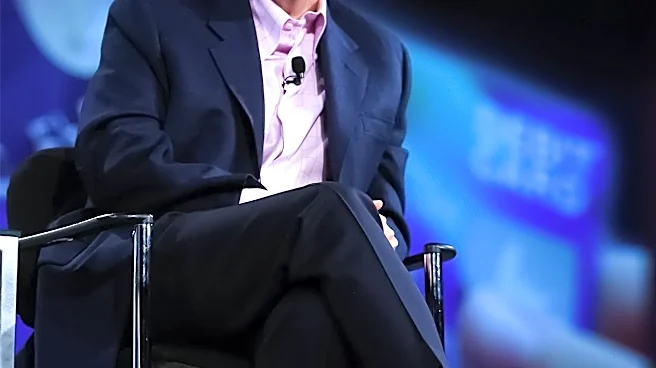
In the early 1990s, when most people were still figuring out what a personal computer even was, Bill Gates was already sketching out its ultimate evolution. His vision, famously captured in a 1990 memo and keynote titled 'Information At Your Fingertips,'
went far beyond simply having a PC on every desk. He imagined a world where technology would act as a powerful intermediary—a 'digital personal assistant' that knew your habits, anticipated your needs, and seamlessly managed the flow of information in your life. In his 1995 book, 'The Road Ahead,' he further detailed this concept, calling these assistants 'agents.' This wasn't just about faster spreadsheets; it was about fundamentally changing how humans interact with computers, shifting from a world of explicit commands to one of conversational partnership.
From Clippy's Failure to Today's Agents
The road to this future was littered with noble failures. Early attempts at proactive assistants, like Microsoft Bob (1995) and the infamous Office Assistant 'Clippy' (1997), are now punchlines in tech history. They were built on the right idea—that software should help you proactively—but the technology simply wasn't ready. Clippy was a 'bot,' not a true agent; it was limited, couldn't learn from user behavior, and was more annoying than assistive. As Gates himself has pointed out, Clippy has as much in common with a modern AI agent as a rotary phone has with a smartphone. For the vision to become reality, computing needed decades of advancements: the rise of the internet, cloud computing, and, most critically, the breakthrough of large language models (LLMs) that allow for natural, nuanced conversations.
The AI Assistant: A Dream Realized?
Today's AI assistants, from integrated 'copilots' in software to standalone conversational AI, are the direct descendants of Gates's agent concept. He predicted a future where you wouldn't need to open separate apps for separate tasks; instead, you would simply tell your agent what you want to do in natural language. That's precisely the promise of the current AI era. These new agents can draft emails, analyze data, create business plans, and even book travel by understanding your context and preferences. Gates has described this as the biggest revolution in computing since we moved from typing commands to tapping on icons, and he believes it will completely change society within the next five years.
Beyond the Original Blueprint
While Gates's vision was remarkably accurate, the reality of the AI era is proving to be even more expansive. He correctly identified the need for a 'digital nervous system' for businesses and the power of democratizing information. What was harder to foresee was the sheer creative power of generative AI. His original concept focused more on agents finding and organizing existing information. Today's AI can generate entirely new content, from code and images to complex written analysis, acting less like a librarian and more like a creative partner. Furthermore, the rise of these powerful agents has brought a host of complex ethical questions about privacy, bias, and job displacement to the forefront—issues that are now a central part of the conversation about AI's future.