


The Generalist vs. The Specialist
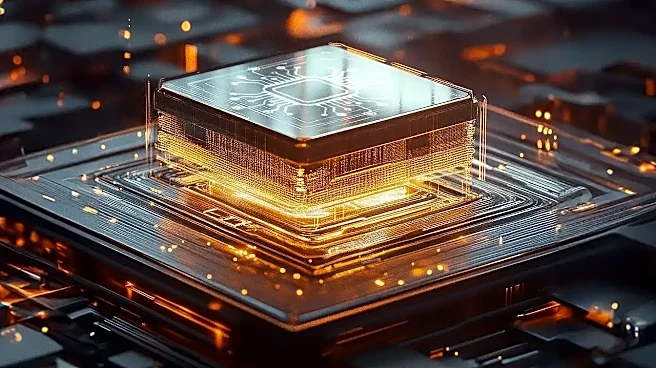
Think of an Nvidia GPU as a high-performance Swiss Army knife. Born from the world of video games, GPUs are masters of parallel processing—handling thousands of calculations at once. This makes them incredibly versatile for graphics, scientific computing,
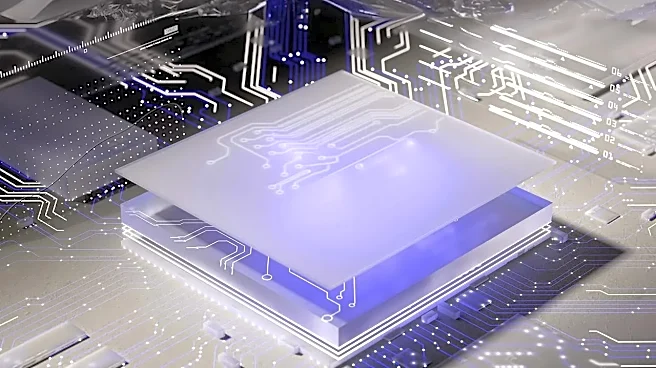
and a wide array of AI tasks. Their architecture, featuring thousands of flexible cores, is designed to tackle almost any complex problem you throw at it. A Google TPU, or Tensor Processing Unit, is more like a specialized surgical tool. It was designed from the ground up for one job: the specific type of matrix math, called tensor operations, that forms the backbone of modern neural networks. TPUs are Application-Specific Integrated Circuits (ASICs), meaning they strip away the general-purpose flexibility of GPUs to achieve extreme efficiency on their target workloads. This specialization can lead to significant gains in speed and power efficiency for the right kind of AI job.
The Software Moat: CUDA's Kingdom
Hardware is only half the battle; software is the other. Nvidia's biggest advantage isn't just its silicon—it's CUDA, its mature programming platform. For over 15 years, researchers and developers have built the world of AI on top of CUDA. This ecosystem includes a vast collection of libraries, tools, and community knowledge that makes developing on Nvidia GPUs the default path for most projects. If you're using a popular framework like PyTorch, the path to running on an Nvidia GPU is well-trodden and deeply supported. Google's TPUs have historically been tied more closely to its own frameworks like TensorFlow and JAX. While this creates a tightly integrated and powerful system for users within that ecosystem, it has presented a barrier for the much larger PyTorch community. Recognizing this, Google has recently made significant moves, including open-sourcing 'TorchTPU' in collaboration with Meta, to make its hardware more accessible to PyTorch developers and chip away at CUDA's dominance.
Accessibility and The Cost Equation
How you get your hands on these chips is a major differentiator. Nvidia GPUs are everywhere. You can buy them off the shelf, find them in servers from nearly any vendor, and rent them from every major cloud provider, including AWS, Microsoft Azure, and Google Cloud itself. This gives developers enormous flexibility and portability. TPUs, in contrast, are almost exclusively available through Google Cloud. You can't buy a TPU and install it in your own data center. This makes TPUs a bet on Google's cloud ecosystem. The cost comparison is just as nuanced. While a single high-end GPU might have a higher hourly rental price than a single TPU, the equation changes at scale. Because TPUs are purpose-built and Google doesn't pay Nvidia's hefty profit margins, they can offer better performance-per-dollar and performance-per-watt for large, sustained AI workloads like training massive models or running high-volume inference. This has led major AI players like Anthropic to make massive investments in Google's TPU infrastructure.
The Right Tool For The Right Job
Ultimately, the choice between a GPU and a TPU comes down to the specific workload. For research, rapid prototyping, or running a wide variety of open-source models, the flexibility and mature software ecosystem of Nvidia's GPUs are often unbeatable. They are the safe, reliable choice for most teams, especially those that need to run code across different cloud platforms or on their own hardware. TPUs shine brightest at massive scale and with a degree of predictability. They are exceptionally good at training the gigantic language models that power generative AI and are proving to be highly cost-effective for 'inference'—the process of running a trained model to get results. As inference can become far more expensive than training over a model's lifetime, the superior power efficiency and cost-per-operation of TPUs are becoming a critical strategic advantage for hyperscale companies. Recognizing this, Google has even begun releasing specialized TPUs for training (TPU 8t) versus inference (TPU 8i).