







The Old Myth: A Conference Just for 'Sales People'
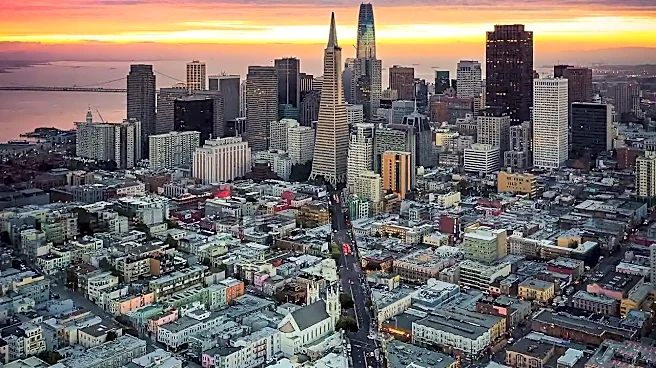
For over two decades, Dreamforce has been the flagship event for Salesforce, the company that defined the cloud-based CRM industry. It started in 2003 and grew into a global phenomenon, drawing hundreds of thousands of people to San Francisco to talk
about managing customer data, sales pipelines, and service tickets. The association was strong and simple: Salesforce sold CRM, and Dreamforce was its biggest showcase. This legacy created a powerful and enduring myth that the conference was primarily for sales managers, service reps, and the technical administrators who supported them. While that community remains a vital part of the event, holding onto that narrow view in 2026 means missing the much bigger story.
Reality #1: The 'Agentic Enterprise' Is Here
The single biggest theme dominating Dreamforce 2026 is the 'Agentic Enterprise'. This isn't just a fancy new buzzword; it's a fundamental shift in strategy. The idea is to create a workforce where humans collaborate with autonomous AI agents to get work done faster and smarter. Salesforce is embedding these agents, under the 'Agentforce' brand, across its entire product suite. The conversation at Dreamforce is no longer just about how people can use software better, but how AI agents can automate tasks, provide predictive insights, and handle complex workflows, freeing up employees for more strategic work. This focus on a blended human-AI workforce moves the conference far beyond the traditional boundaries of CRM.
Reality #2: Data Is the New Center of Gravity
Salesforce is making an unambiguous statement at Dreamforce 2026: you don't have an AI strategy without a data strategy. The company's Data Cloud (rebranded as Data 360) is being positioned as the essential foundation for its entire platform. The logic is that AI agents are only as good as the data they are trained on. Sessions and keynotes are heavily focused on how businesses can unify their fragmented customer data from all sources—not just the CRM—into a single, trusted, real-time platform. This allows the new AI agents to have the full context they need to be effective. The emphasis has shifted from simply storing customer information to actively connecting and activating all business data.
Reality #3: Slack Is the New Digital HQ
Since its acquisition, Slack's role in the Salesforce ecosystem has become increasingly central, and Dreamforce 2026 solidifies its position as the 'Work Operating System'. It's being presented as the conversational interface where employees, data, and the new AI agents all come together. Instead of logging into dozens of different systems, the vision is for work to happen within Slack channels. For example, sales teams can get updates on their deals, service agents can resolve cases, and marketers can review campaigns by interacting with Agentforce directly in Slack. This turns Dreamforce into a forum on the future of work and collaboration, not just customer management.
Reality #4: It's an Industry-Specific Playbook
Another sign of Dreamforce's evolution is the deepening focus on specific industries. Salesforce has been rolling out tailored 'Industry Clouds' for sectors like Healthcare, Financial Services, Manufacturing, and even a newly announced Life Sciences Cloud. These aren't just slightly modified versions of the core CRM; they are distinct platforms with unique data models, compliance features, and workflows built for the specific needs of that sector. The sessions and speakers at Dreamforce reflect this, with tracks dedicated to solving problems in verticals from automotive to retail. This shows a strategy that moves beyond a one-size-fits-all approach to offering highly specialized, end-to-end solutions.