




Starlink isn't just another internet provider; it's a complete reimagining of how data moves. Its globe-spanning satellite mesh operates on principles that defy decades of terrestrial network design, creating unique hurdles for even top engineers.
A Network That Never Sits Still
A traditional
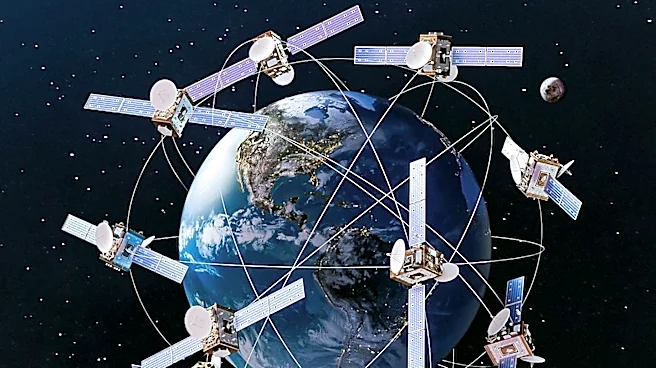
terrestrial network is predictable. A router in a data center doesn't change its physical location. Engineers build careers on managing these static, ground-based systems. Starlink throws that entire playbook out the window. The core of its network consists of thousands of satellites in low Earth orbit, hurtling through space at roughly 17,000 miles per hour. This means the network's physical topology is in a state of constant, high-speed flux. A user's terminal might talk to one satellite for a few minutes before seamlessly handing off to another that has entered its field of view. This process of constant, automated handovers is a monumental software challenge. For a senior network engineer accustomed to physically stable fiber optic lines and stationary cell towers, the mental shift is profound. They must stop thinking about fixed paths and start thinking about probability clouds of connectivity, where the 'best' route for data changes not just by the day, but by the second.
Thinking in Three Dimensions, Not Two
Planning a terrestrial network is largely a two-dimensional task—a map of fiber lines, cell towers, and data centers. Starlink’s architecture forces engineers to think in three dimensions. The network isn't a flat map; it's a dynamic, layered sphere of constantly moving nodes. Routing decisions are not just about finding the shortest path between two points on the ground, but also about calculating which satellite is in the optimal position overhead, whether it has a clear line of sight, and which of its neighbors it should talk to next. This adds layers of complexity that don't exist in ground-based systems, including managing orbital mechanics and compensating for Doppler shift as satellites move toward or away from a user. Instead of just managing network logic, engineers are grappling with the physics of orbital trajectories, creating a hybrid discipline that merges network engineering with astrodynamics.
Space Lasers Change Everything
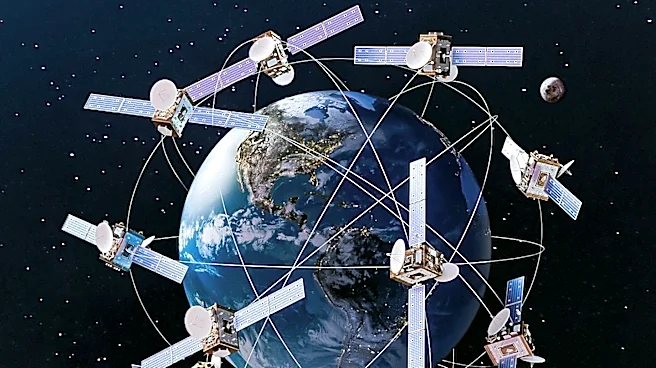
Initially, Starlink satellites acted as simple 'bent-pipe' relays, receiving a signal from a user and immediately bouncing it down to the nearest ground station. This limited coverage to areas with a healthy distribution of ground infrastructure. The game-changer was the introduction of optical inter-satellite links (ISLs), commonly known as space lasers. These lasers allow satellites to form a mesh network in space, passing data between one another at speeds up to 100-200 Gbps per link. This effectively creates a fiber-optic backbone in orbit, allowing data to traverse continents or oceans by hopping between satellites before ever touching the ground. For engineers, this is a radical departure. The challenge of acquiring and holding a laser lock on another satellite thousands of kilometers away, while both are moving at orbital velocity, is a massive feat of precision pointing and software control. It also means latency can sometimes be lower than terrestrial fiber, since light travels significantly faster in the vacuum of space than it does through glass.
Where Hardware Ends and Software Begins
In a legacy network, the hardware often dictates the rules. A router has specific ports, and its function is largely fixed. Starlink's network, by contrast, is almost entirely software-defined. The complex routing, satellite handovers, beamforming, and resource allocation are all managed by incredibly sophisticated software and algorithms. This means the system's capabilities are not static; they are fluid and can be upgraded and reconfigured via software updates pushed to the entire constellation. While this provides incredible flexibility and resilience, it also represents a steep learning curve for hardwarecentric engineers. The 'box' itself—the satellite—is less important than the code running on it. Troubleshooting isn't about checking a physical cable; it's about debugging a distributed system that spans the entire globe and operates under conditions of constant motion and variable demand. This shift forces engineers to become experts in largescale software systems, not just networking protocols.