






The Inevitable Pivot from Cloud to Couch
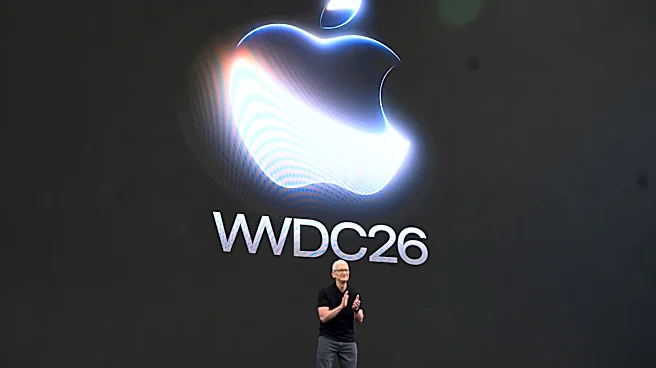
For the past several years, the artificial intelligence arms race has been defined by one thing: scale. Bigger models, bigger data centers, bigger cloud budgets. But Apple has been playing a different, quieter game, one that’s set to mature by WWDC 2026.
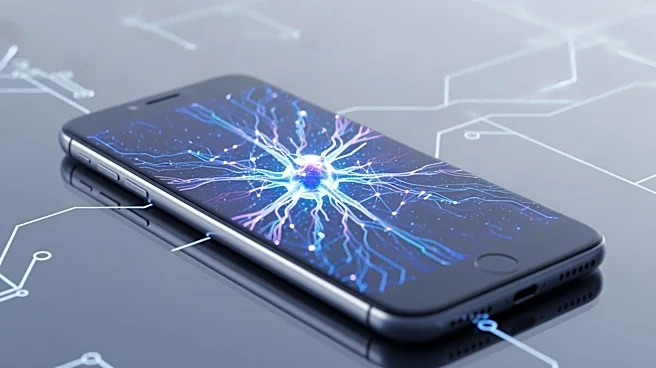
Their strategy, rooted in a decade of silicon investment in the Neural Engine, has always prioritized on-device processing. The reasons are obvious to anyone who owns an iPhone: privacy, speed, and offline capability. By running AI models directly on a user’s device, Apple sidesteps the thorny privacy issues of sending personal data to the cloud and eliminates the latency that plagues server-based requests. As we approach 2026, the industry is beginning to catch on. The future of truly personal computing isn't a chatbot in a data center; it's an intelligent assistant that lives entirely in your pocket, securely and instantly.
The Unsexy Detail: Your App's Resource Budget
This is where most developers will get it wrong. They’ll be so focused on implementing the latest, most powerful models from Cupertino that they’ll miss the most critical constraint: the resource budget. An iPhone or MacBook, unlike a cloud server, has a finite, moment-to-moment budget of power, memory, and thermal headroom. A brilliant AI feature that makes the device hot to the touch or slashes battery life by 30% isn't a feature; it's a bug. Users don't care how many billions of parameters your model has if their phone dies before lunch. By 2026, this 'resource budget' will become the single most important factor separating great AI-powered apps from a graveyard of deleted ones. It will no longer be enough to just call an AI API. Developers will be held responsible for the energy and thermal footprint of every inference their app makes. This is the unglamorous, engineering-heavy detail that will define the next wave of mobile software.
The New Gatekeeper: Power and Thermal APIs
So, what’s the one specific detail to watch for at WWDC 2026? It won’t be a flashy new model architecture. It will be the boring but revolutionary introduction of sophisticated, low-level APIs for power and thermal management. Imagine a new framework, let's call it 'ResourceKit,' that gives developers unprecedented visibility into their app's real-time impact on the device's System on a Chip (SoC). Think Xcode instruments on steroids, but with APIs that allow an app to gracefully degrade its AI features based on the device's state. Is the battery below 20%? Maybe your app's AI summary feature switches from a complex on-device model to a simpler, faster one. Is the device getting warm during a video call? Your app could be notified to pause its background AI indexing task. Apple won't just provide these tools; they will likely enforce their use. Apps that are bad citizens—power-hungry and thermally unaware—could be down-ranked in the App Store or flagged in analytics. Mastering this API will become as fundamental as managing memory or designing a user interface.
How to Prepare for the Shift Today
You don’t have to wait until 2026 to start thinking like this. The transition is already underway. Developers should immediately prioritize becoming experts in a few key areas. First, master model optimization. Learn everything you can about quantization, pruning, and distillation to shrink your AI models without sacrificing too much accuracy. Make Core ML and its performance profiling tools your best friends. Second, become obsessed with energy efficiency. Use Xcode's energy gauges not as a final check, but as a primary development tool. Profile your app's performance under different conditions—low battery, on cellular, while multitasking. Finally, start shifting your mindset. Stop thinking of on-device AI as a fallback for when the cloud is unavailable. Start designing with a device-first mentality, where the primary experience is fast, private, and efficient, and the cloud is used only as a supplement, not a crutch. The developers who internalize this ethos today will be the ones shipping award-winning apps in 2026.