






An Idea Waiting for Its Moment
The story of the Transformer isn't one of a single, sudden invention. It's more like a brilliant key being designed long before the right lock was built. The foundational concepts of artificial neural networks—the software brains that learn from data—have
roots going back to the mid-20th century. Even the secret sauce of the Transformer, a mechanism called 'attention,' was explored in AI research years before the pivotal 2017 paper, "Attention Is All You Need," was published. Older models like Recurrent Neural Networks (RNNs) tried to process language one word at a time, like a person reading a sentence. This was logical but incredibly slow and made it hard for the model to connect a word at the beginning of a long paragraph with one at the end. Researchers knew there had to be a better way, but the theoretical pieces were just one part of the puzzle.
The Unlikely Hero: Your Gaming PC
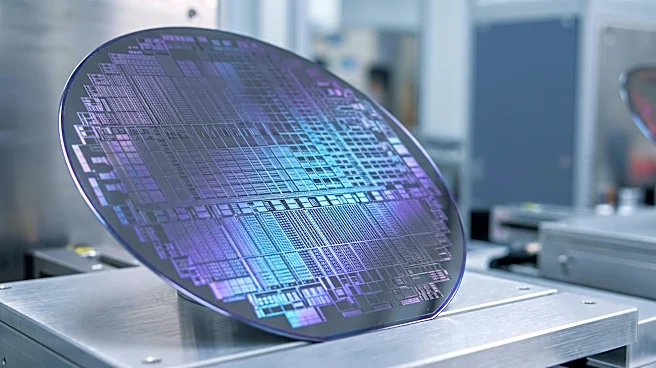
For decades, the biggest bottleneck wasn't the idea, but the engine. Training a neural network involves a colossal number of mathematical calculations. CPUs, the traditional brains of computers, are masters of sequential tasks—doing one thing at a time, very quickly. But neural networks are different; they require performing thousands of similar calculations all at once. Enter the Graphics Processing Unit, or GPU. Originally designed to render the complex 3D graphics of video games, GPUs are built for parallel processing. Their architecture, with thousands of smaller cores, was perfectly suited for the massive, simultaneous computations that AI researchers dreamed of running. As the gaming market drove the development of more powerful and affordable GPUs, the AI community found its workhorse. Suddenly, training times that once took weeks or months could be slashed to days or hours, making real progress possible.
Fuel for the Fire: The Data Explosion
An AI model, no matter how clever its design or powerful its hardware, is useless without data. It learns by example, and for a long time, there simply weren't enough examples to go around. Early AI projects were starved for the massive datasets needed to train complex models. The internet changed everything. The explosion of digital text, images, and code created a global, accessible library of human knowledge. Suddenly, researchers had access to the petabytes of fuel required to train these hungry algorithms. Pre-training, the process of first training a model on a vast corpus of general internet data before specializing it, became the standard. This combination of near-infinite data with the hardware to process it created the perfect environment for a breakthrough.
The 2017 Spark: Attention Is All You Need
This brings us to 2017. With powerful GPUs widely available and the internet providing a sea of data, the stage was set. The Google researchers behind the "Attention Is All You Need" paper introduced an architecture that was built from the ground up to exploit these conditions. The Transformer's key innovation was to ditch the one-word-at-a-time approach of RNNs entirely. Its self-attention mechanism allowed the model to look at every word in a sequence at the same time and decide which other words were most important for context. This design was not only better at understanding long-range relationships in text but was also massively parallelizable. It was the perfect match for the GPU hardware that was waiting. It wasn't just a new model; it was the key that unlocked the full potential of the hardware and data that had been developing for years.