






The First Beachhead: More Than Cheap TVs
For most Americans in the 1980s, Samsung was a brand associated with affordable, if not exactly premium, consumer electronics like televisions and microwave ovens. But behind the scenes, the South Korean giant was making a colossal bet that would redefine
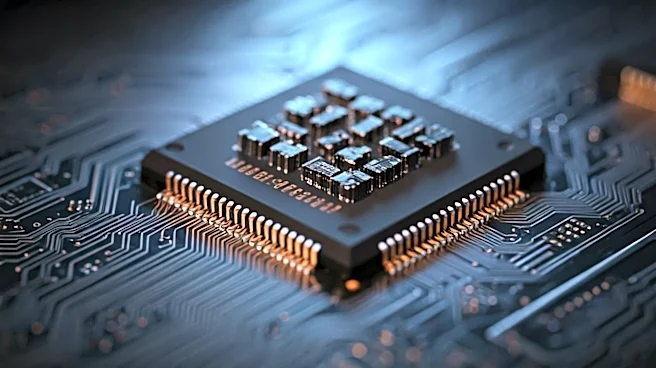
its future and the global tech landscape. It was pouring billions into the ferociously competitive semiconductor market, specifically memory chips. At the time, this arena was dominated by American pioneers like Intel and a cohort of powerful Japanese companies. Samsung was the underdog, using a strategy of massive investment and aggressive pricing to claw its way into the market for DRAM (Dynamic Random-Access Memory)—the chips that provide the short-term memory your computer needs to run applications.
An American Bet: The Austin Fab
Samsung’s U.S. story isn’t just about selling products; it’s about making them here. In 1996, the company broke ground on a massive semiconductor fabrication plant, or “fab,” in Austin, Texas. This wasn't a token gesture. It was a multi-billion-dollar commitment that represented one of the largest single foreign investments in U.S. history at the time. Building a cutting-edge fab in the U.S. was a masterstroke. It placed Samsung physically closer to key American customers like Dell and Apple, shortened supply chains, and gave it a foothold inside the world’s most important technology ecosystem. The Austin facility became a cornerstone of its global operations, quietly churning out the memory chips that would power the coming digital explosion long before “onshoring” became a political buzzword.
Scandal, Dominance, and Sharp Elbows
The path to dominance wasn't always clean. In the early 2000s, the Department of Justice uncovered a massive international conspiracy to fix the prices of DRAM chips. Samsung, along with competitors like Hynix and Infineon, was a central player. The investigation revealed that top executives from these rival firms met in secret to coordinate prices, artificially inflating costs for computer manufacturers and, ultimately, consumers. Samsung pleaded guilty in 2005 and paid a staggering $300 million fine—one of the largest criminal antitrust fines in U.S. history. This episode is a crucial part of the story; it illustrates the brutal, high-stakes nature of the memory market and the aggressive tactics Samsung employed to secure its position as the undisputed world leader in memory technology.
The Unseen Engine of the Modern World
After the scandal, Samsung solidified its leadership not just in DRAM but also in NAND flash—the storage memory that holds your photos, apps, and operating system. As the world shifted from desktops to laptops and then to smartphones, Samsung was there, providing the essential components that made it all possible. The iPhone couldn't exist without vast quantities of NAND flash. The cloud couldn't function without data centers packed with high-performance DRAM. Samsung became the invisible engine of the tech boom. While consumers saw the Apple, Google, or Dell logo, inside, Samsung memory was often doing the heavy lifting, a testament to its successful, long-term strategy of dominating the component supply chain.
Full Circle: The CHIPS Act and a New Texas Bet
Today, that history is more relevant than ever. In the wake of pandemic-related supply chain disruptions and rising geopolitical tensions, the U.S. government passed the CHIPS and Science Act to encourage domestic semiconductor manufacturing. And who was one of the first and biggest players to respond? Samsung. The company is now building a new, even more advanced $17 billion fab in Taylor, Texas, not far from its original Austin site. This investment isn’t just about business; it’s a strategic move that aligns with U.S. national security goals to secure the supply of critical technologies. Samsung’s long history in Texas gave it the experience, relationships, and infrastructure to move quickly, reinforcing its role as a key partner in America’s tech future.