






A Star is Born on Live TV
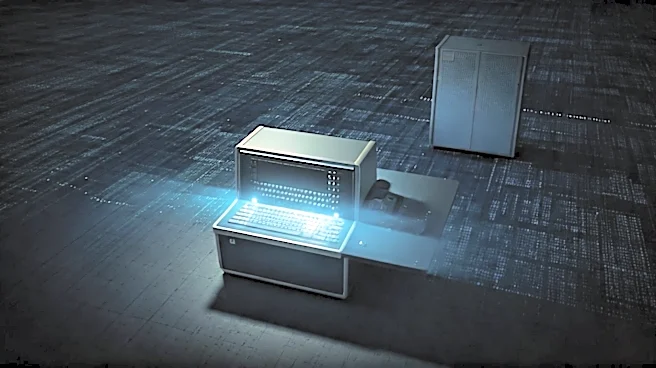
On election night 1952, the CBS television network had a secret weapon: a room-sized, million-dollar computer called the UNIVAC I. Its job was to analyze early returns and predict the presidential winner. As the night wore on, the machine confidently projected a massive landslide for Dwight D. Eisenhower, a result so contrary to expert opinion that the programmers lost their nerve and tweaked the code to produce a more 'believable' forecast. But by the end of the night, the original, stunningly accurate prediction was revealed. The UNIVAC became an overnight celebrity. For the first time, the American public saw a computer not as an abstract weapon of war, but as a magical brain that could outthink the experts. The age of commercial computing
had seemingly arrived, and UNIVAC was its undisputed king.
The Fateful Acquisition
The minds behind UNIVAC, J. Presper Eckert and John Mauchly, were brilliant engineers who had previously worked on the ENIAC computer for the U.S. Army. They founded their own company to build the first computer designed for business and government data processing. But building giant, complex machines was ruinously expensive. Facing financial collapse, they sold their pioneering company in 1950 to Remington Rand, a legacy firm best known for making typewriters and electric shavers. On the surface, it was a lifeline. Remington Rand had the capital and manufacturing muscle to bring UNIVAC to the world. In reality, it was the moment the seeds of failure were sown. Eckert and Mauchly had sold their invention, but they had also sold its fate to a corporate culture that was utterly unprepared for what it had bought.
The ‘Hidden’ Decision: Selling a Shaver
This is where the hidden decision lies. It wasn't one single choice made in a smoke-filled boardroom, but a fundamental, catastrophic misunderstanding of the product. Remington Rand executives viewed the UNIVAC as a piece of hardware—a very complex, very expensive typewriter. Their business model was simple: build a machine, sell it for a huge one-time profit, and move on to the next customer. They failed to grasp the revolutionary truth: the value wasn't just the machine, but the entire ecosystem around it. Businesses didn't just need a computer; they needed programmers, software, maintenance, training, and ongoing support. The idea of leasing machines, providing robust customer service, or building a software library was alien to a company accustomed to selling standalone office equipment.
How IBM Stole the Future
Meanwhile, IBM, then a dominant but far less technologically advanced player focused on punch-card machines, was watching. Initially terrified by UNIVAC's capabilities, IBM's leader, Thomas Watson Jr., quickly recognized Remington Rand's fatal flaw. IBM didn’t try to build a better computer overnight. Instead, they built a better business model. They leveraged their existing, massive sales force and deep relationships with corporate America. They didn't just sell machines; they sold solutions. They leased their computers, which lowered the barrier to entry for businesses wary of a massive capital outlay. They invested heavily in software development and created an army of service technicians and sales engineers to hold their customers' hands. While Remington Rand was trying to sell a product, IBM was selling a partnership. By the mid-1950s, despite UNIVAC's technical head start, IBM was capturing the market. The term 'computer' was becoming synonymous with 'IBM.'