








Meta is pouring an astonishing amount of money into artificial intelligence, with capital spending projected to hit $145 billion in 2026. Behind that number lies a critical debate: buy vs. build. It’s a choice that will define its future.
The Default Choice: All-Powerful GPUs
For the last
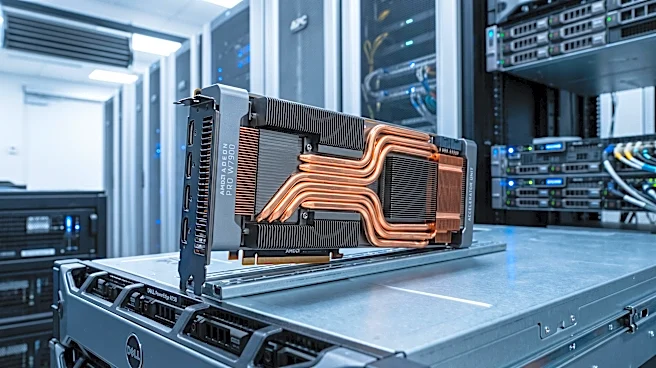
decade, one type of hardware has overwhelmingly powered the AI revolution: the Graphics Processing Unit, or GPU. Originally designed to render video game graphics, their ability to perform many parallel calculations at once made them perfect for training and running AI models. Nvidia, the primary maker of these chips, built a dominant market position, with some estimates putting its AI accelerator revenue share around 75% in 2026. For companies like Meta, buying GPUs is the fastest way to get AI infrastructure up and running. They are flexible, supported by a mature software ecosystem (Nvidia's CUDA), and capable of handling nearly any AI model you throw at them. The downside? They are expensive, with high-end chips costing thousands of dollars apiece, and relying on them means being dependent on an outside supplier with immense pricing power.
The Custom Route: Building Your Own Engine
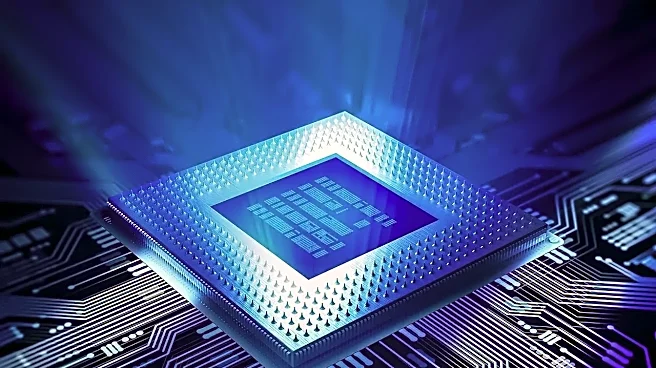
The alternative to buying off-the-shelf is to design your own custom silicon, known as an Application-Specific Integrated Circuit (ASIC). An ASIC is a chip built for one purpose and one purpose only. Think of it as the difference between a versatile Swiss Army knife (a GPU) and a specialized surgical scalpel (an ASIC). By stripping away all non-essential functions, an ASIC can perform its specific task with far greater speed and power efficiency. For a company operating at Meta's scale, running recommendation algorithms and generating AI responses billions of times a day, that efficiency translates into massive cost savings over time. The catch is that designing and manufacturing a custom chip requires a huge upfront investment, a long development timeline, and carries the risk of being inflexible if AI technology suddenly pivots.
Meta's Big Bet on 'MTIA'
Faced with this dilemma, Meta is doing both—but its long-term strategy leans heavily toward 'build'. The company is aggressively developing its own line of custom chips called the Meta Training and Inference Accelerator, or MTIA. In partnership with Broadcom, Meta is on a rapid, six-month development cycle, a much faster pace than the industry standard. The goal is to create chips perfectly tailored to its most common workloads, like the ranking and recommendation systems on Facebook and Instagram, and the 'inference' tasks of running its generative AI models. Meta claims its in-house chips can deliver a 44% lower total cost of ownership and 40% better power efficiency compared to general-purpose GPUs for those specific tasks. While still purchasing billions of dollars in GPUs from Nvidia and AMD, the MTIA program is Meta’s strategic play to control its own destiny and rein in runaway operational costs.
A Familiar Playbook in Big Tech
Meta isn't alone in this pursuit. The move toward custom silicon is a well established trend among tech giants looking to escape Nvidia's shadow and optimize performance. Google was a pioneer with its Tensor Processing Units (TPUs), which have powered its search and AI services for years and are now seen as a serious competitor to GPUs for certain workloads. Amazon has its Trainium and Inferentia chips, and Microsoft has also developed its own AI silicon. For these hyperscale companies, the logic is the same: when you run predictable AI tasks at a global scale, the eye watering upfront cost of designing a custom chip can pay for itself within a year through lower energy use and operational savings. It's a strategic shift from simply being a consumer of technology to becoming the architect of your own foundational infrastructure.