

First, What Are Diffusion Models?
Before we get into the future, let’s demystify the technology. You've seen their work in AI-generated art from tools like DALL-E or Midjourney. A diffusion model is a type of generative AI that learns to create things by first learning how to destroy
them. During training, the model takes clean data—like a perfect photograph—and systematically adds random digital 'noise' step-by-step until the original image is nothing but static. It carefully studies this process of degradation. Then, to generate something new, it does the exact opposite. It starts with pure random noise and, using what it learned, reverses the process, progressively 'denoising' the static until a coherent, brand-new image appears. Think of it like a sculptor who sees a statue in a block of marble and chips away the excess stone; the model starts with chaos and carves out a clear result based on the patterns it has learned.
The 'Prediction' Is About Possibility, Not Prophecy
This is where the headline gets interesting. Diffusion models don't predict the future in the way a weather forecast predicts rain. They don't tell us which stock will rise or who will win an election. Instead, they 'predict' by generating a vast array of plausible future options based on the data they were trained on. They answer questions like, "What could a more fuel-efficient engine look like?" or "What are some new molecular structures that could fight this disease?" The 'prediction' is the output—a new design, a new molecule, a new piece of architecture. These models are engines of exploration. By showing us millions of viable, previously un-thought-of possibilities, they accelerate human innovation, allowing researchers, engineers, and designers to test and validate ideas that might have taken them decades to conceive on their own.
Real-World Revolutions: From Drug Discovery to Engineering
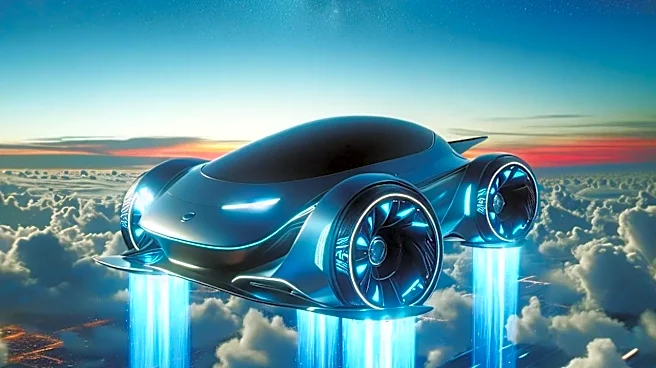
While image generation gets all the attention, the most profound impact of diffusion models over the next decade will be in science and industry. In pharmaceuticals, researchers are using them to design entirely new drug molecules from scratch. By providing the model with a target protein associated with a disease, it can generate novel 3D molecular structures specifically shaped to bind to that protein, a process known as structure-based drug design. This could dramatically speed up the discovery of new medicines for diseases previously considered 'undruggable.' Similarly, engineers are using diffusion models to design everything from more aerodynamic car bodies to novel materials with specific properties. The models can also generate synthetic data—artificial datasets used to train other AIs when real-world data is scarce, sensitive, or expensive to collect.
The Ghost in the Machine: Biases and Blind Spots
For all their power, diffusion models have significant limitations. They are not sentient and have no true understanding of the world. Their creativity is a sophisticated remix of the data they were trained on. This means they inherit all the biases, gaps, and stereotypes present in that data. If a model is trained on historical engineering designs, it might struggle to generate something that breaks from established conventions. Furthermore, ensuring the outputs are realistic and feasible is a major challenge. A model might generate a geometrically perfect molecule that is impossible to synthesize in a lab or a beautiful product design that violates basic principles of physics. The complexity and randomness of the generation process also make the models difficult to interpret; it's hard to know exactly why they produce one output over another.