






The AI Promise: Unmatched Speed and Scale
Let's give artificial intelligence its due. In cybersecurity, AI is a force multiplier that excels at tasks humans simply can't perform at scale. An AI-driven platform can analyze billions of log entries from networks, servers, and applications in seconds,
spotting known malware signatures or patterns of suspicious behavior. This is the core strength of modern security tools: processing overwhelming volumes of data to find the needle in the haystack. For Security Operations Centers (SOCs) drowning in alerts, AI provides automated triage, filtering out the noise of false positives and prioritizing the most likely threats. It handles the repetitive, high-volume work, freeing up its human counterparts from monotonous tasks and allowing them to focus on more complex challenges. Organizations using AI and automation have been shown to identify and contain breaches significantly faster than those who don't, a critical advantage when every second counts.
Where AI Fails: Context, Creativity, and Common Sense
For all its power, AI has significant blind spots. Its greatest weakness is a lack of genuine understanding. An AI model doesn't know the 'why' behind an alert; it only knows that a data point deviates from a pattern. It can't distinguish between a malicious action and an unusual but legitimate one, like an administrator running a rare diagnostic script. This is where context becomes king. A human analyst understands the business, its people, and its processes. They know that a login from a new location might be a threat, or it might just be the CFO on a business trip. Furthermore, AI systems are vulnerable. They can be fooled by 'adversarial attacks', where attackers make tiny, deliberate changes to their activity to evade detection. They can also be 'poisoned' with bad data during training, leading them to ignore real threats. And when faced with a truly novel, or 'zero-day', attack that doesn't match any pre-existing pattern, an AI is often flying blind until it's too late.
The Human Edge: Intuition and Strategic Thinking
This is where human analysts prove their enduring value. They possess skills that algorithms can't replicate: intuition, creative problem-solving, and strategic thinking. A seasoned analyst develops a 'hunter's mindset', looking for not just what is there, but what isn't. They can connect seemingly unrelated, low-priority events across different systems to uncover a sophisticated, slow-moving attack that an AI would dismiss as noise. This ability to interpret ambiguity and make judgment calls under pressure is uniquely human. Beyond investigation, human analysts are crucial for communication. When a breach occurs, they are the ones who must explain the complex technical details to leadership, assess the business risk, and devise a strategic response. They handle the ethical and compliance decisions that AI is not equipped to make. This blend of technical acumen and emotional intelligence is something no model can currently offer.
A Partnership, Not a Replacement
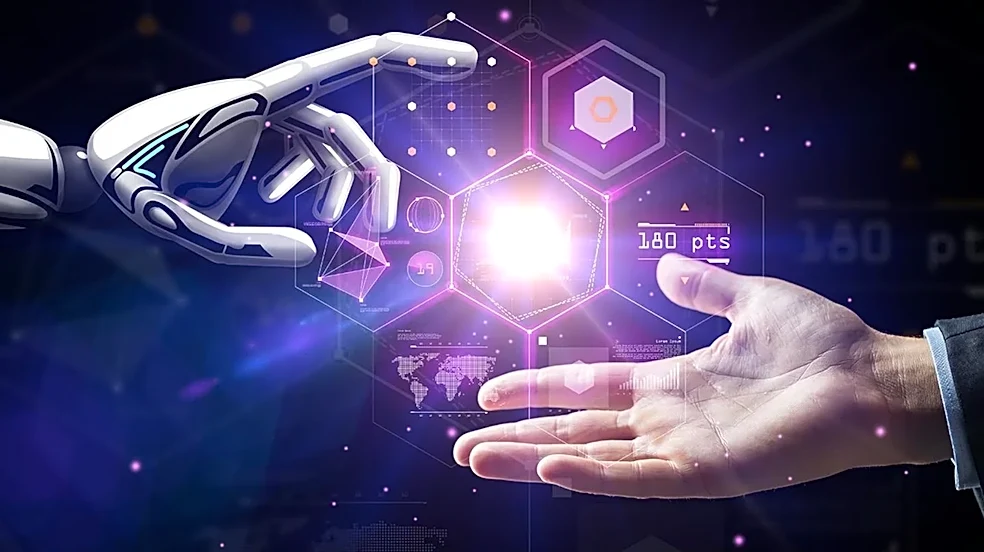
The most effective cybersecurity posture isn't AI-only or human-only; it's a hybrid approach known as 'human-in-the-loop' (HITL). In this model, AI does the heavy lifting, handling the immense scale of data analysis and automating routine responses. But it's a human who validates its findings, investigates the most complex alerts, and makes the final, high-stakes decisions. Think of AI as a perpetually vigilant junior analyst who never sleeps, presenting its findings to a senior human analyst for final review and action. This partnership allows organizations to get the best of both worlds: the speed and scale of machines combined with the deep, contextual expertise of people. The future of the cybersecurity profession doesn't lie in competing with AI, but in learning how to leverage it. The analysts who will be most in demand are those who understand how AI works, know its limitations, and can use it to elevate their own strategic capabilities.