





The Age of the Digital Castle: Active Directory
For nearly two decades, enterprise identity meant one thing: Microsoft Active Directory (AD). Launched with Windows 2000, AD was the digital gatekeeper for the on-premise world. Think of a company's network as a castle; AD managed the keys, ensuring only
trusted employees could access the computers, printers, and file servers inside the castle walls. It was built for a world where your work was done on a company-owned PC, inside a company-owned building, connected to a company-owned network. It excelled at this, giving IT administrators granular control over their domain. But its strength was also its weakness: it was designed for a world inside the firewall, and the internet was about to tear those walls down.
The Cloud Breaks the Perimeter
The rise of software-as-a-service (SaaS) applications, mobile devices, and remote work shattered the castle-and-moat security model. Employees needed access to cloud apps like Salesforce and Microsoft 365 from anywhere, on any device. Traditional Active Directory wasn't built for this; it didn't natively support mobile devices or modern web authentication protocols. This created a security gap. To bridge it, Microsoft created Azure Active Directory, a separate, cloud-based identity service built for the internet age. For years, most companies lived in a 'hybrid' state, using classic AD for on-premise resources and Azure AD for the cloud, syncing the two so employees could have one password for everything.
Entra ID: Identity as the New Security Control Plane
In 2023, Microsoft rebranded Azure AD and related products into the Microsoft Entra family. This was more than a name change; it signaled a strategic shift. With resources scattered across clouds and devices, the only constant is the user's identity. Entra ID is designed as an identity-centric control plane. Unlike AD, which primarily asks, 'Is your password correct?', Entra ID asks a series of smarter questions through features like Conditional Access: 'Is this the right user, on a trusted device, in an expected location, at a reasonable time, and is their session showing risky behavior?'. It enforces multi-factor authentication (MFA) and even passwordless sign-in, making it the new, intelligent security perimeter for the modern business.
The Next Frontier: Governing AI Agent Access
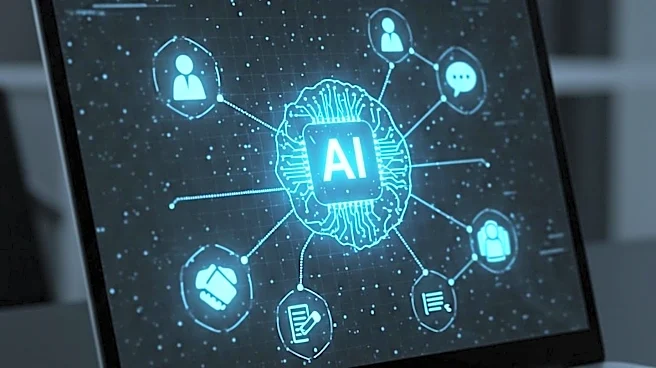
The evolution doesn't stop with human users. The next major challenge is securing access for non-human identities, specifically AI agents and copilots. These agents, which can act autonomously to perform tasks, need their own permissions to access data and services. But an AI agent isn't just another service account; its behavior is dynamic and can change based on a simple prompt, creating a new and potent security risk. An agent running with an employee's full permissions could access or modify data at machine speed, far beyond what a human could. Microsoft's answer is to extend Entra's governance capabilities to these non-human identities. This involves giving agents their own distinct, auditable identities with narrowly scoped, just-in-time permissions, ensuring that an AI assistant built to schedule meetings can't also access financial reports. It's about building a security framework where every action, whether by a human or an AI, is tied to a verified and appropriately permissioned identity.