






Forget the Camera, Watch the Chip
Every iPhone launch is a spectacle of consumer-facing features—a better camera, a brighter screen, a new color. But for those building the future of technology, the main event isn't the device itself, but the processor powering it. With the iPhone 18,
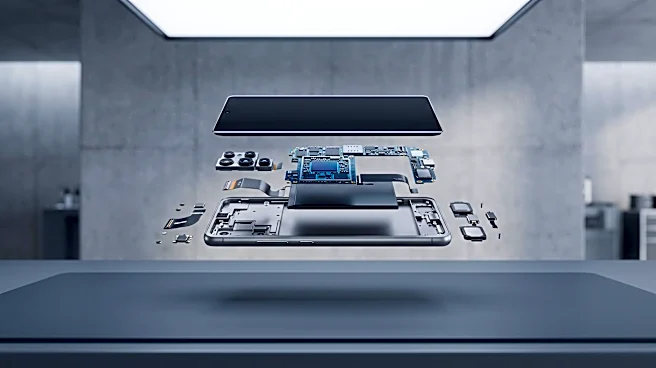
all eyes will be on the A20 Pro chip and, more specifically, its Neural Engine. This specialized hardware is the heart of Apple’s on-device AI strategy. While competitors often lean on powerful cloud servers to handle complex AI tasks, Apple has consistently prioritized running AI models directly on the iPhone. This approach is built on a philosophy of privacy and performance, and the capabilities of the A20 Pro's Neural Engine will signal exactly how ambitious Apple plans to be. Leaks and analyst predictions suggest a significant leap in the Neural Engine's power, potentially built on a new 2-nanometer process that boosts both performance and efficiency. For engineers, this isn't just a spec bump; it's a statement of intent. A more powerful Neural Engine allows for more sophisticated generative AI tasks—like nuanced language translation or complex image editing—to happen locally, without sending user data to the cloud. It tells developers what kind of AI-powered features they'll be able to build into their own apps, setting the standard for the entire mobile industry.
The On-Device AI Difference
Apple's focus on on-device AI, branded as Apple Intelligence, is its key differentiator in a crowded market. While Google and others leverage massive, cloud-based models, Apple’s strategy is to make AI invisible and personal, woven directly into the operating system. The iPhone 18 event will be a practical demonstration of this strategy in action. The benefit is twofold: privacy and speed. By processing data locally, Apple can assure users that their personal information—their messages, photos, and daily activities—isn't being used to train corporate AI models in the cloud. For tasks that require more power, Apple uses a system called Private Cloud Compute, which sends data to secure servers for processing but is architected to ensure even Apple cannot access it. This privacy-first stance is a major selling point, but it's the performance that engineers will be scrutinizing. On-device AI eliminates the latency of sending data back and forth to a server, making AI features feel instantaneous. When you see new iOS features that seem to anticipate your needs or understand context across different apps, it's the Neural Engine doing the heavy lifting in real-time. The sophistication of these features will tell engineers how far ahead Apple is in creating an AI that is truly ambient and assistive.
Reading the Software Tea Leaves
The hardware sets the potential, but the software—iOS 20—reveals the plan. The new features Apple demonstrates will be the most concrete examples of its AI roadmap. Expect to see a much more capable Siri, one that can understand natural, conversational language and perform complex, multi-step tasks across apps. This is made possible by improved foundation models that are efficient enough to run on the device. Developers will be watching closely to see how Apple opens up these capabilities to them. Through frameworks like App Intents, third-party apps can register their functions with the system, allowing Apple Intelligence and Siri to invoke them. For example, a more advanced Siri might be able to understand a command like, "Find the photos from my trip to Chicago last month, pick the best one of the skyline, and send it to my mom." Executing this requires the AI to interact with the Photos app, an image analysis model, and the Messages app seamlessly. The new capabilities shown at the iPhone 18 launch will define the kinds of integrated experiences developers will be expected to build for the next year and beyond.
A Competitive Blueprint
Finally, the iPhone 18 event provides a clear look at how Apple views its position in the broader AI war against rivals like Google and Samsung. Google has a head start in large-scale, cloud-based AI with its Gemini models, which are deeply integrated into Android. Apple, by contrast, seems to be playing a different game, conceding dominance in massive data-center models while aiming to own the market for personal, private AI that lives on your device. The company may even continue to partner with Google, using Gemini for certain complex, server-based queries while keeping its own Apple Intelligence for on-device tasks. This hybrid strategy allows Apple to benefit from Google's strengths without compromising its core privacy promise. For engineers and industry watchers, this isn't a sign of weakness but a clever strategic hedge. It acknowledges that the future of AI isn't a single, monolithic model in the cloud, but a combination of on-device and server-side processing. The iPhone 18 launch will clarify the boundaries of that strategy and show how Apple intends to carve out its own defensible territory in the age of AI.