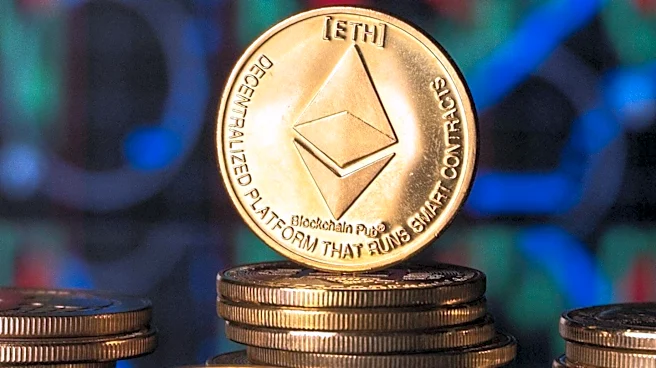








Solidity is the undisputed king of smart contract programming, powering the engine of Ethereum and countless other blockchains. But for all its dominance, it attracts a steady drumbeat of criticism. While much of that is noise, critics have a point.
The Double-Edged Sword of Immutability
To
understand the core issue, you have to appreciate the central promise of blockchain technology: immutability. Once a smart contract is deployed on a network like Ethereum, its code is permanent and unchangeable. This is a feature, not a bug. It’s the foundation of trust in a decentralized system. You don’t need to trust a person or a company when you can trust the code itself, knowing it can't be secretly altered after the fact. This principle of 'code is law' is what makes smart contracts so powerful, enabling automated, trustless agreements for everything from financial derivatives to digital art ownership. Solidity was built to serve this paradigm, creating permanent logic that lives on the blockchain forever.
When 'Code Is Law' Becomes a Prison
Here's the one thing critics get profoundly right: this immutability is also Solidity’s greatest curse. In traditional software development, finding a bug is routine. You write a patch, push an update, and the problem is solved. In the world of Solidity, a bug deployed to the blockchain is a permanent, irreversible vulnerability. There are no take-backs. The most infamous example of this is The DAO hack of 2016. A clever attacker exploited a flaw in The DAO’s smart contract code, allowing them to drain millions of dollars worth of Ether. The bug, a 'reentrancy attack', was a result of how the code handled external calls before updating its own internal state. Because the contract was immutable, the only way to reverse the damage was to perform a controversial 'hard fork' of the entire Ethereum network, effectively rolling back history. This event split the community and created a separate blockchain, Ethereum Classic.
The Crushing Weight of a Single Mistake
The DAO hack wasn't a one-off event; it was a dramatic demonstration of a fundamental risk. For Solidity developers, the stakes are astronomically high. A single misplaced line of code, an overlooked edge case, or a math error like an integer overflow can lead to the instantaneous and permanent loss of millions, or even billions, of dollars. This reality places immense pressure on developers and auditing firms, who must catch every conceivable flaw before deployment. Unlike a website that goes down or a mobile app that crashes, a flawed smart contract can become an open vault for attackers to exploit with impunity. The principle of immutability means there is no 'undo' button, making every deployment a high-wire act with no safety net.
A Search for Safer Ground
This unforgiving environment is precisely why a new generation of smart contract languages has emerged. Languages like Move (used by Sui and Aptos), Rust (used by Solana and Polkadot), and Vyper (an alternative on the EVM) were designed with security as a primary focus. Many of these languages aim to prevent common Solidity pitfalls at the language level, making it harder for developers to make catastrophic mistakes. For example, Move treats digital assets as 'resources' that cannot be accidentally copied or deleted, eliminating an entire class of bugs. While Solidity remains dominant due to its massive ecosystem and developer base, the very existence of these alternatives is a direct response to the valid criticism that Solidity’s environment is inherently perilous.