





The iPhone in the Age of Apps
Think about how you use your iPhone right now. You want to find a photo from a trip, edit it, and send it to a friend. You open the Photos app, scroll or search, tap 'Edit,' make your changes, then jump to the Messages app to share it. You are the operator,
and the apps are your distinct, single-purpose tools. For nearly two decades, this has been the fundamental grammar of the smartphone. The iPhone became the world’s most successful product by being a brilliant, portable container for these tools. Its genius was in the App Store, which put a universe of functions in your pocket. Yet, the intelligence has always been siloed. The device knows your location, your calendar, and your contacts, but it rarely connects those dots for you without being explicitly told. It’s a supremely capable assistant, but one that waits for precise instructions.
The 'Before' State: What is Apple Intelligence?
Enter Apple Intelligence, the system-wide AI layer introduced with iOS 18. This isn't just about Siri getting a bit smarter; it's a fundamental rewiring of the operating system. Apple Intelligence combines powerful generative models with your personal context—your emails, messages, photos, and calendar—to provide assistance that's genuinely personal. It powers new Writing Tools to rewrite an email in a different tone, creates images on the fly with Image Playground, and helps you find a specific photo with a natural command like, "Show me pictures of Sarah at the beach last summer." Crucially, much of this happens on the device itself for speed and privacy. For more complex tasks, it can use a secure 'Private Cloud Compute' system, where data is processed but never stored or seen by Apple. This is the 'Before' picture: a software foundation that makes the iPhone aware and conversational in a way it never has been before.
The 'After' Vision: An AI-Native iPhone 18
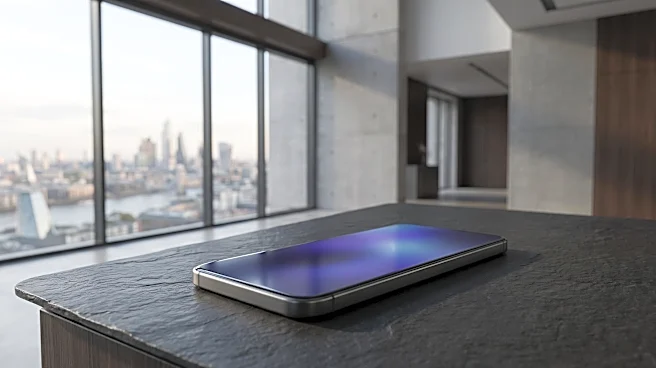
The iPhone 18, then, won't just be running this new software; it will be the first generation of hardware designed from the ground up to embody it. The 'After' picture is a device where the lines between apps begin to dissolve. Instead of you navigating the apps, the intelligence layer does it for you. Imagine asking your phone, "Book a reservation for two at that Italian place my wife mentioned last week for 7 PM on Friday and add it to our shared calendar." Today, that's a multi-app scavenger hunt. On an AI-native iPhone, it could be a single, fluid action handled by Siri. To make this possible, rumors suggest the iPhone 18 Pro will feature a new A20 Pro chip built on a more efficient process, designed specifically to accelerate on-device AI. This isn't just about making apps run faster; it's about providing the horsepower for constant, proactive, and context-aware intelligence without draining your battery. The phone becomes less of a tool you command and more of a partner that anticipates.
Beyond the Smartphone: A New Relationship With Tech
This transition re-frames the entire purpose of the iPhone. It’s a shift from a device defined by its applications to one defined by its ambient intelligence. The core value is no longer just the camera quality or the screen resolution, but the quality of the assistance it provides. This move positions Apple to compete not just with other phone makers, but with the entire concept of AI agents. It changes the user's relationship with their device from one of direct manipulation to one of delegation. In this new era, the best device won't be the one with the most apps, but the one that understands you best. By leveraging its deep integration of hardware and software, and a strong emphasis on privacy, Apple is betting that its version of AI will be the one users trust with their personal context. The iPhone 18 event, therefore, will be less about showing off a new gadget and more about demonstrating a new way of living with technology.