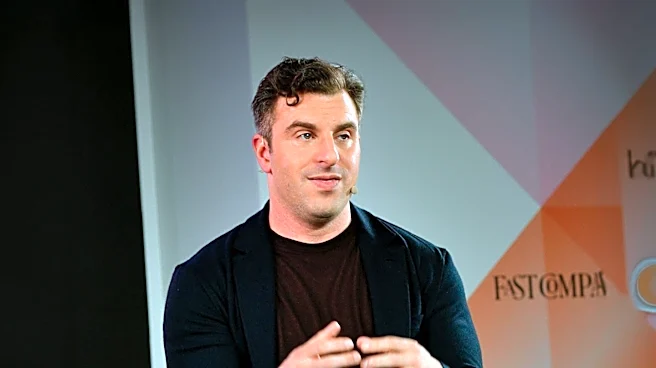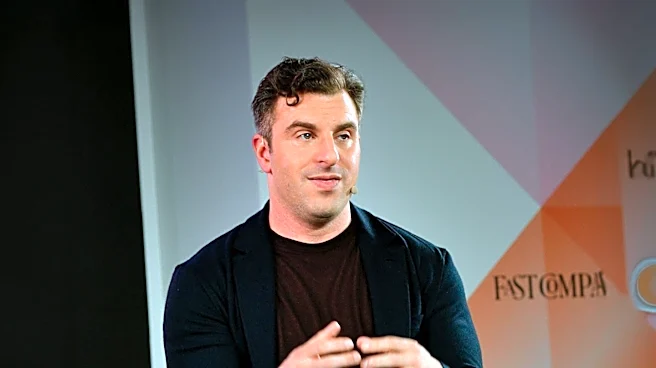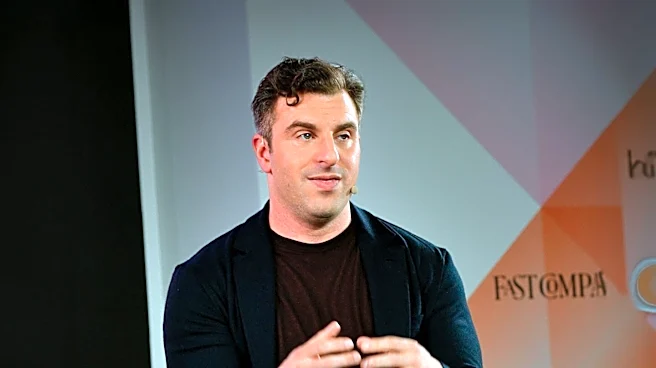






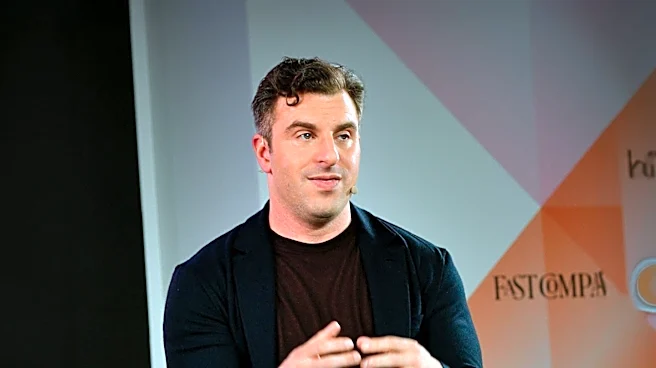
1. Brian Chesky, Airbnb
The most direct parallel to Gebbia is his own co-founder and fellow Rhode Island School of Design (RISD) alumnus, Brian Chesky. While Gebbia was the initial spark behind the 'AirBed & Breakfast' idea, Chesky became the driving force that scaled its design-led
culture. Like Gebbia, Chesky views design not as what something looks like, but how it works and makes people feel. He famously championed the 'eleven-star experience' thought experiment to push the company beyond simple service to create magical user moments. Studying Chesky reveals how to keep a founder's design-first ethos alive as a company grows from a living room startup into a global powerhouse, proving that a deep understanding of human experience can be a company’s most valuable asset.
2. Melanie Perkins, Canva
If Gebbia’s legacy is about applying design to build trust, Melanie Perkins’ is about democratizing design itself. The Canva co-founder’s journey mirrors the early grit of Airbnb. While teaching design programs at a university, she became frustrated by how complex and expensive professional tools were. This led to a multi-year, rejection-filled quest to build a simple, accessible, and collaborative platform for everyone. Like Gebbia, who was inspired by the Eames principle of 'design for the masses', Perkins was driven by a user-centric mission. Her relentless focus on solving a real user problem—making design easy—and her perseverance through countless investor pitches embody the same tenacity that saw Gebbia and Chesky sell novelty cereal boxes to keep Airbnb afloat.
3. Stewart Butterfield, Slack & Flickr
Stewart Butterfield is the master of the pivot, twice building billion-dollar companies from the ashes of failed video games. Both Flickr (born from 'Game Neverending') and Slack (an internal tool for a game called 'Glitch') were not the original plan. This echoes the resourcefulness of Airbnb's founders, who turned a need to pay rent into a global hospitality brand. Butterfield’s genius lies in recognizing a powerful, underlying user need within a failing project and doubling down on it. He shares Gebbia’s focus on the human experience of technology, building tools that facilitate better communication and connection. His story is a masterclass in separating a core, valuable idea from its initial, flawed packaging—a crucial skill for any innovator.
4. Tony Fadell, Nest & iPod
Tony Fadell, often called the 'father of the iPod,' is a testament to how industrial design principles can revolutionize entire industries. At Apple, and later as the founder of Nest Labs, Fadell focused on reinventing everyday objects by making them smarter, simpler, and more intuitive. His philosophy was to focus on the core function of a device and perfect it, rather than adding superfluous features—a direct contrast to the tech industry's 'more is more' habit. This mirrors Gebbia's own education in industrial and graphic design, and his belief in using design to solve fundamental problems. Studying Fadell offers a hardware-focused perspective on Gebbia’s software and service ethos: that great design isn’t about adding technology, but about using it to create a more thoughtful, human-centered experience.
5. Yvon Chouinard, Patagonia
While not a tech founder, Yvon Chouinard built Patagonia on a philosophy that deeply resonates with Gebbia's values: purpose-driven design and product integrity. Chouinard, a self-taught blacksmith, started by making climbing gear for himself and his friends that was better and more sustainable than anything available. This product-first, values-led approach is the bedrock of Patagonia. Chouinard’s motto, 'Make the best product', emphasizes functionality, durability, and simplicity, arguing that good design is as little design as possible. This commitment to quality and purpose over short-term profit offers a powerful lesson for any founder who, like Gebbia, seeks to build a lasting company with a soul. Chouinard proves that a business can be a vehicle for a founder's core beliefs.