






The Obvious Specs Everyone Focuses On
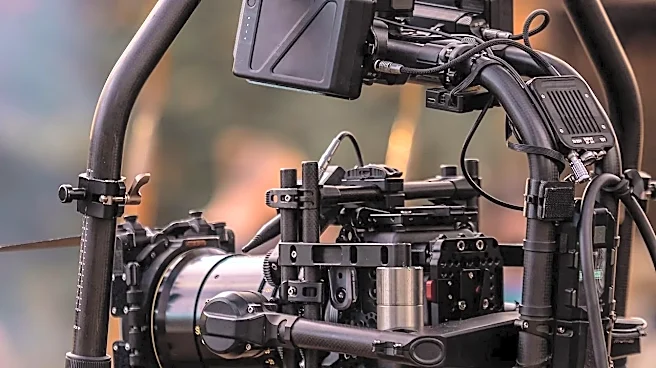
Almost every gimbal buyer's guide starts and ends with the same three hardware pillars. First, there's payload: the maximum weight the gimbal's motors can carry. You're told to weigh your camera, lens, and any accessories to ensure the gimbal can handle
it. Second is 3-axis stabilization, which is now the industry standard for correcting unwanted pan, tilt, and roll movements. Finally, guides point to battery life, promising a certain number of hours for a full day of shooting. These features are important—they're the ticket to entry. A gimbal that can't carry your camera or dies in an hour is useless. But focusing only on these specs is like judging a car solely on its engine size and tire pressure. It ignores the most critical element: how the machine actually feels and performs in the real world.
The Real Game-Changer: Software and Motor Algorithms
The hidden detail most reviews gloss over is the sophistication of the gimbal's software and the intelligence of its motor algorithms. A gimbal is more than just a set of powerful motors; it's a robotic brain making thousands of micro-corrections per second. This 'brain' is the software ecosystem, which includes the mobile app you use to control settings and the firmware that runs on the gimbal itself. The quality of this ecosystem is what separates a high-end, reliable tool from a frustrating gadget. Great hardware with bad software will produce bad results. Powerful motors are useless if the algorithm controlling them is sluggish, jerky, or poorly tuned. This is where you find the true difference between a gimbal that produces professional-looking footage and one that introduces its own subtle, infuriating problems.
Why Jittery Footage Happens with 'Good' Gimbals
Have you ever seen footage from a gimbal that has a persistent, high-frequency 'jitter' or 'micro-shake'? This often happens even when the camera is perfectly balanced and well within the payload limit. The culprit is frequently a primitive motor algorithm. The gimbal's motors are technically strong enough, but they are either over-correcting or under-correcting for movement, creating a nervous vibration. Superior gimbals, through their software, allow for fine-tuning. You can adjust motor response, deadband (how much you can move before the gimbal reacts), and speed. This lets you perfectly match the gimbal's performance to your specific camera and lens combination, as well as your shooting style—whether you're doing a slow, cinematic pan or aggressively tracking a moving subject. Without this software control, you're stuck with the factory settings, which may not be optimal for your gear.
How to Spot a Superior Gimbal Ecosystem
So, how do you evaluate something that isn't listed on the box? First, look at the manufacturer's track record with firmware updates. Do they regularly release updates that fix bugs, add features, and improve performance? A recent post noted a DJI update that allowed gimbal control directly from a phone's native camera app, a huge workflow improvement that came purely from software. Second, dive into reviews that specifically discuss the companion app. Is it intuitive or clunky? Does it offer advanced features like object tracking, motion-lapse, and, most importantly, detailed motor calibration? Finally, look for user feedback on long-term stability. Brands that invest in their software and algorithms—like Zhiyun's 10th-gen algorithm, which was built to precisely remove subtle shakes—tend to have more satisfied professional users. Don't just ask if the gimbal can hold your camera; ask if its software is smart enough to control it perfectly.