







In the world of artificial intelligence, two numbers tell a crucial story: Nvidia's relentless chip release schedule and Meta's astronomical infrastructure budget. This isn't a coincidence; it's the blueprint for the next phase of the AI race.
Nvidia's One-Year Cadence: The Rubin Era Begins
Nvidia CEO
Jensen Huang has made it clear that the days of waiting two years for a new generation of AI hardware are over. The company is now on an aggressive one-year cadence. Following the wildly successful Blackwell architecture, the next family of chips, named after astronomer Vera Rubin, is already ramping into full production. The Rubin platform is not just an incremental upgrade; it is a ground-up redesign for what Nvidia calls 'agentic AI'—complex, multi-step AI workflows that require sustained performance. The platform features the new Rubin GPU, a 'Vera' CPU, and a host of other new networking and processing chips designed to work in concert. Compared to its Blackwell predecessor, the Rubin platform promises significant leaps in performance and efficiency, including a 10x lower cost per token generated by an AI model. For customers, this means the ability to train more powerful models and run inference workloads far more economically. The roadmap doesn't stop there, with an even more powerful 'Rubin Ultra' slated for 2027, signaling Nvidia’s intent to maintain its dominant position by constantly raising the performance bar.
Meta's Staggering Bet on AI Infrastructure
On the other side of the equation is Meta, a company placing one of the largest financial bets in corporate history on artificial intelligence. According to its recent earnings reports, Meta projects its capital expenditures for 2026 to be between $135 billion and $145 billion, a figure largely dedicated to building out its AI infrastructure. This massive spend includes servers, data centers, and, most critically, tens of thousands of Nvidia's high-end GPUs. For context, the company’s capital spending in the third quarter of 2026 alone was $34.91 billion. This level of investment has pressured the company's financials, even pushing free cash flow into negative territory in the most recent quarter. CEO Mark Zuckerberg has justified the spending as an absolute necessity to compete with other AI leaders and to power the company's future, from its advertising business to its long-term vision of 'personal superintelligence' and advanced AI agents.
The Symbiotic Relationship: Building the AI Factories
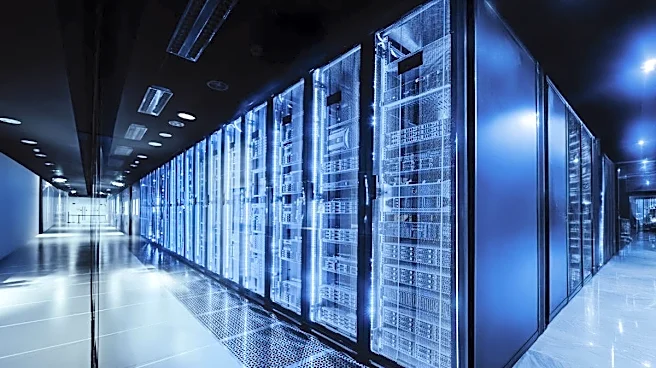
This is where the two stories converge. Meta's nine-figure spending plan is effectively a massive, recurring order for Nvidia's latest and greatest hardware. Nvidia is building the 'picks and shovels' for the AI gold rush, and Meta is its biggest customer, buying them by the truckload. Jensen Huang often talks about the rise of 'AI factories'—data centers engineered specifically to produce intelligence. Meta is building some of the largest AI factories on the planet, and they run on Nvidia's architecture. The performance gains promised by the Rubin platform directly enable the complex models Meta needs for its products, like the 'Muse' AI assistant and the recommendation algorithms that power Facebook and Instagram. In turn, Meta's massive orders provide Nvidia with the revenue and demand visibility it needs to fund its breakneck research and development cycle. This codependence is a defining feature of the current tech landscape.
The High Stakes Future
This partnership, while mutually beneficial, is not without risk. For Meta, the gamble is enormous. The company is spending more on infrastructure than the annual GDP of many small countries, with the expectation that its AI investments will eventually generate significant new revenue and solidify its market position. If the returns don't materialize as quickly as hoped, or if competitors create more compelling AI products, the financial pressure will be immense. For Nvidia, the primary risk is concentration. While it has many customers, the sheer scale of orders from a handful of hyperscalers like Meta, Microsoft, and Google means that a decision by any one of them to slow spending or pivot to inhouse chip designs could significantly impact its outlook. For now, however, the path forward seems set. Meta needs the most powerful compute it can buy, and Nvidia is the only company that can provide it at scale and cadence required.