
They Say: 'Aren't They Just Spy Cams for Your Face?'
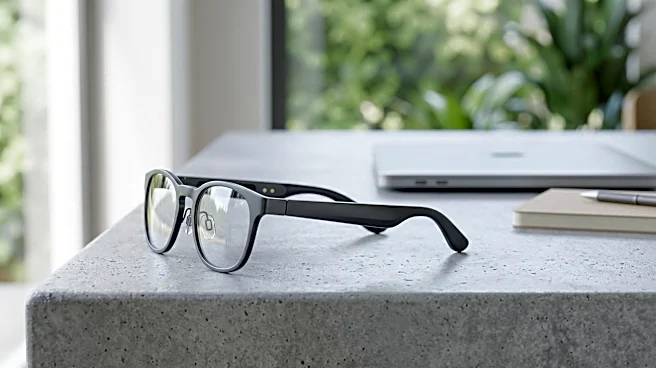
This is the biggest hurdle: privacy. Your friend’s concern is valid and shared by many. Start by acknowledging it. Then, explain the built-in safeguards. Most current models, like the Meta Ray-Ban, have
a very visible LED light that illuminates whenever the camera is recording. While critics argue it can be subtle, it’s designed as a clear indicator for people around you. Some reports even note that manufacturers are working on software updates to disable the camera if the LED is tampered with. You can also frame it in context. We live in a world of doorbell cameras, public CCTV, and everyone holding a smartphone capable of recording at any moment. The key difference with AI glasses is the first-person perspective, which can feel more invasive. The conversation isn’t about surveillance being new, but about new forms of it. Reassure your friend that just like with a phone, the user is responsible for recording ethically and respecting consent, a social norm that's still developing around this tech.
They Say: 'Okay, But What Do They Actually Do Besides Take Pictures?'
This is where you shift from defense to offense by highlighting the “hands-free convenience” that is the core value proposition. The camera is just one feature. Explain that AI glasses are best understood as a phone accessory that keeps your phone in your pocket and your head up. Focus on a few specific, genuinely useful functions. You can listen to music or podcasts with open-ear speakers, take calls, or get turn-by-turn navigation overlaid in your vision. The real game-changer is the AI assistant. You can ask it questions about what you’re looking at—like identifying a plant, translating a menu in real-time, or checking the price of a product online. Models like the Brilliant Labs Frame are specifically designed around this kind of quick, glanceable information. It’s not about replacing your phone; it’s about handling small, specific tasks more seamlessly.
They Say: 'It Seems Distracting and Anti-Social.'
The ghost of the Google “Glasshole” haunts this entire category. Your friend is picturing you checked out of reality, staring at a screen only you can see. Explain that today’s designs are far more subtle. Many look like regular glasses, and the goal of most features is to keep you more present, not less. Instead of pulling out your phone, breaking eye contact, and typing, you can get information with a quick voice command or a subtle glance. For example, a runner can check their pace without looking at a watch, or a tourist can translate a sign without stopping to use a phone app. The interaction is meant to be brief and contextual. The point isn’t to scroll through social media on your face; it’s to get a quick answer or capture a fleeting moment and then get right back to the real world. The best use cases reduce friction, they don't add a new layer of distraction.
They Say: 'Why Not Just Use Your Phone? It Does All That Already.'
This is the ultimate question of necessity. The answer is that while a phone can do most of these things, AI glasses can do a few of them better by changing the context. The phone is a destination; you have to stop what you're doing to use it. AI glasses are a companion; they integrate into what you're already doing. Provide a concrete example. If you’re cooking, you can follow a recipe without smudging a screen with messy fingers. If you’re playing with your kids, you can capture a video from their perspective without a phone creating a barrier between you. It’s about the unique value of a hands-free, first-person interface. Acknowledge that for many people, this isn't a necessary leap. But for specific moments, it offers a convenience a phone can't match. It’s a luxury gadget, not yet a utility, and it's okay to admit that.
They Say: 'It's a Lot of Money for Something I Don't Need.'
You can’t argue with this one, so don’t try. Instead, agree. AI glasses are expensive, with popular models costing several hundred dollars. The battery life is often limited to a few hours of heavy use, and the AI features can still be slow or require a strong internet connection. It’s an early-adopter product, and the price reflects that. Frame the purchase as an investment in a new category of technology, not as a replacement for a mature product like a smartphone. Explain that you find the specific features worth the cost for your own use cases, but that you understand why it's not for everyone right now. This lowers the stakes of the conversation. You’re not trying to sell them a pair; you’re just explaining why you, personally, are on board. That honesty will be far more persuasive than trying to justify the price tag on universal terms.