


We often view AI as a tool that simply mimics reality, but the underlying math of models like StyleGAN suggests something much deeper is happening to the way we perceive and create the world around us.
The Magic of Latent Space
To understand where we are going, we first have to
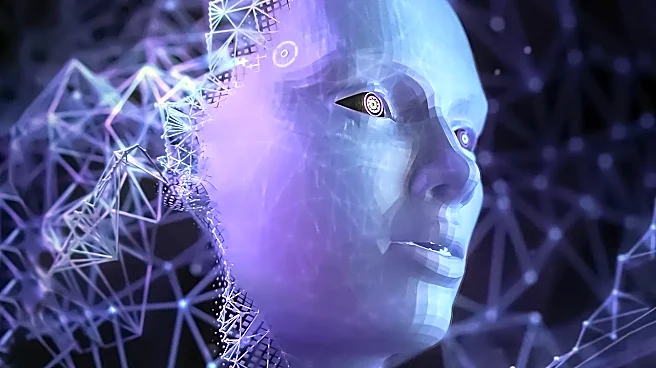
understand how these machines 'think.' Take StyleGAN, a powerhouse in the world of facial manipulation. Unlike older methods that tried to change an image pixel by pixel—like trying to repaint a photo with a tiny brush—StyleGAN operates in what researchers call 'latent space.' Instead of manipulating colors and lines directly, it manipulates 'styles.' It treats an image like a series of control knobs: one knob adjusts the shape of a face, another changes the lighting, and another tweaks the texture of the skin. By moving through this mathematical space using 'direction vectors,' the AI can transition a person from young to old or add a smile without destroying the underlying identity of the subject. This shift from pixel control to style control is the first hint of a larger trend: AI is moving from being a digital photocopier to a digital architect of concepts.
From Tools to Extensions of Thought
This technical leap has massive implications for how humans interact with information. As Midjourney founder David Holz has noted, the current explosion in image generation is just the beginning. We are moving toward a reality where AI isn't just a tool you use, but an extension of your own cognitive processes. When you can instantly visualize a specific historical art style or a complex scientific concept, the barrier between 'knowing' and 'doing' evaporates. In the past, knowledge was something you stored in your head; in the coming decade, knowledge becomes a creative force that you can deploy instantly. This creates a feedback loop: the more people can create, the more they want to learn the history and mechanics behind what they are making. We aren't just generating pictures; we are generating a renewed hunger for deep understanding.
The Rise of the Super-Imagination Team
If StyleGAN represents the precision of individual attributes, the broader movement toward Generative AI represents the scaling of human imagination. One of the most profound predictions for the next ten years is the emergence of 'super-imagination teams.' While there is much debate about whether Artificial General Intelligence (AGI) will replace specialized tools, the more likely scenario is a symbiotic relationship. We are entering an era where a single individual's creative output could potentially rival that of an entire studio from a decade ago. The future isn't necessarily about one giant AI that does everything, but about millions of people working alongside millions of AI agents to solve problems through visual and conceptual exploration. We are building a collective intelligence where the distinction between a human idea and an AI-assisted realization becomes increasingly blurred.
The Decoupling of Skill and Vision
Perhaps the most significant shift predicted by these technologies is the decoupling of technical execution from creative vision. For most of human history, if you wanted to express a complex visual idea, you had to spend years mastering the physical mechanics of a medium—be it oil paints, darkroom chemistry, or digital software. The math behind latent space manipulation suggests a future where the 'how' becomes automated, leaving the 'what' and 'why' as the primary drivers of value. As AI handles the heavy lifting of rendering, lighting, and texture, the human role shifts toward curation, intent, and high-level conceptualization. The next decade won't just be about better images; it will be about a fundamental redistribution of creative power.