






The Myth: They Simply Needed More Space
The official and most obvious reason for the new campus was growth. When the original Infinite Loop campus was completed in 1993, Apple was a fraction of its current size. By the 2010s, with the explosive success of the iPod, iPhone, and iPad, the company
was bursting at the seams, with over 12,000 local employees scattered across dozens of buildings. A consolidated headquarters was a logistical necessity. Building a massive new campus was the straightforward solution to housing its expanding army of engineers, designers, and marketers under one roof. While true, this explanation is like saying the Sistine Chapel was built to keep the rain out. It misses the much grander, more strategic point of the entire endeavor.
The Reality: It Was Steve Jobs's Final Product
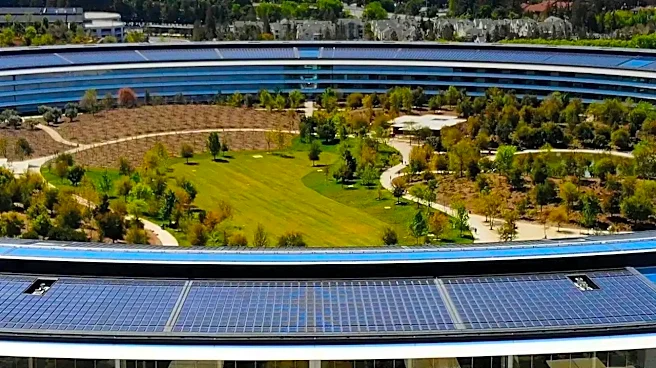
More than a building, Apple Park was one of Steve Jobs’s last and most personal projects before his death in 2011. He wasn't just commissioning an office; he was designing a physical manifestation of Apple's core philosophy. Jobs obsessed over the details with chief designer Jony Ive and architect Norman Foster, from the seamless, curved glass panels to the specific types of fruit trees planted in the central courtyard. He envisioned it not as an office park but as a nature refuge. The campus was to be treated like an Apple product: perfect, intuitive, and beautiful. In his final public appearance, a presentation to the Cupertino City Council, Jobs didn't just sell a building; he sold a vision for the future of work and a legacy for the company he built.
The Reality: Engineering 'Serendipitous' Innovation
The iconic ring shape isn't just for looks. It’s a strategic tool designed to force-function what Jobs believed was the key to innovation: unplanned interactions. Unlike the previous campus, where teams were siloed in separate buildings, the circular design and open-plan layout encourage employees from vastly different departments to literally bump into one another. The theory is that a chance conversation in a cafe or a walk through the massive central park between a software engineer and an industrial designer could spark the next big idea. It’s a physical attempt to recreate the garage-style collaboration that defined Apple's early days, but on an industrial scale for a trillion-dollar company. The entire campus is engineered for these “serendipitous collisions.”
The Reality: A Monument to Corporate Power
In an era when tech rivals were embracing decentralized, remote-first workforces and unremarkable office parks, Apple did the opposite. It invested billions into a single, centralized, and monumental piece of architecture. Apple Park is a fortress of innovation and a powerful statement of permanence. The self-contained campus, with its own 1,000-seat theater, massive fitness center, and energy grid, signals that Apple’s creative core will remain in Cupertino, tightly controlled and integrated. It’s a symbol that, for Apple, the future isn’t just about software and services in the cloud; it’s about a physical place where a specific culture of design and secrecy can be nurtured for generations to come.