





The Ghost of Innovations Past
Remember 2011? Steve Jobs, in one of his final keynotes, introduced Siri as a revolutionary 'humble personal assistant.' For a moment, it felt like science fiction made real. You could talk to your phone, and it would talk back, set reminders, and find
information. But over the next decade, as Google Assistant and Amazon's Alexa evolved, Siri felt… stuck. Ask anyone with an iPhone. The stories are universal: Siri misunderstands simple commands, defaults to a web search for basic queries, or fails to grasp context that seems obvious. While the rest of the tech world sprinted forward, Siri jogged in place. The initial magic faded into frustrating reliability issues, eroding the one thing a good assistant needs: trust. Users learned to lower their expectations, using Siri for timers and alarms but little else. It wasn't just a failure of technology; it was a failure of the initial promise.
The AI Tsunami Apple Ignored
Then, in late 2022, OpenAI released ChatGPT, and the world changed overnight. Suddenly, AI wasn't just about simple commands; it was about generating text, writing code, and having complex, nuanced conversations. Google scrambled to release Gemini, and Microsoft integrated AI into its entire software suite. This was a new paradigm—generative AI—and Apple was conspicuously absent from the conversation. The gap between Siri's capabilities and what a modern AI could do became a chasm. While competitors were building engines of creation, Siri was still struggling to play the right song on the first try. Apple’s long-held focus on user privacy and on-device processing, while admirable, had made it slow and cautious in a market that was suddenly rewarding speed and raw power. The drama hanging over its next big event is a direct result of this technological whiplash.
The High-Stakes WWDC Game Plan
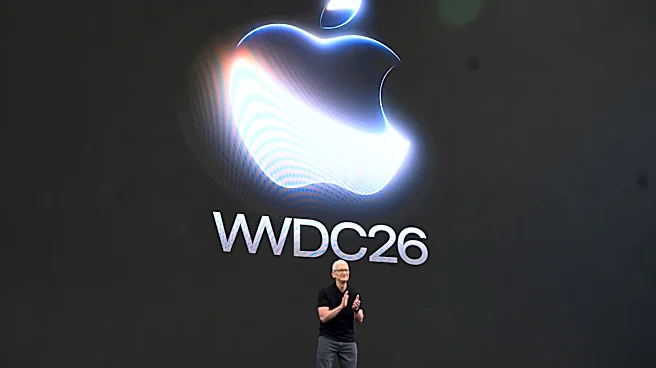
Apple is not a company that likes to appear behind. So, its next Worldwide Developers Conference (which many believe the headline's '2026' is a typo for, with 2024 being the real crucible) is being framed as its grand AI coming-out party. According to a flood of credible reports, the strategy is a hybrid of internal innovation and external partnership. The plan involves a major overhaul for Siri, finally infusing it with large language model (LLM) technology to make conversations more natural and actions more capable. The core of Apple’s pitch, however, will be 'practical AI.' Instead of flashy chatbots that can write a sonnet about your dog, Apple will likely focus on features that summarize notifications, transcribe voice memos, and auto-organize your digital life. To handle more complex queries, Apple is expected to announce a landmark partnership with OpenAI, embedding some ChatGPT functionality directly into iOS. It's a pragmatic admission that they can't do it all alone—at least not yet.
What 'Earning Trust' Actually Means
Rebuilding trust in Siri isn’t just about making it smarter; it's about making it reliable and invisible in the best way possible. A successful reboot means Siri will finally understand context across apps. It means you can ask it to 'send those photos I took at the beach last week to Mom' and it will just work. It's about proactive intelligence—your phone suggesting you leave for the airport now because of traffic, without you having to ask. The biggest challenge, and Apple’s biggest potential advantage, is privacy. The company will likely make 'on-device intelligence' a cornerstone of its announcement. By processing as much data as possible on your iPhone rather than in the cloud, Apple can argue its AI is more secure than the competition's. Earning back trust means delivering an assistant that is not only competent but also respects user privacy. It has to be helpful without being creepy, and powerful without being complicated.