
The Current State: Passive and Reactive
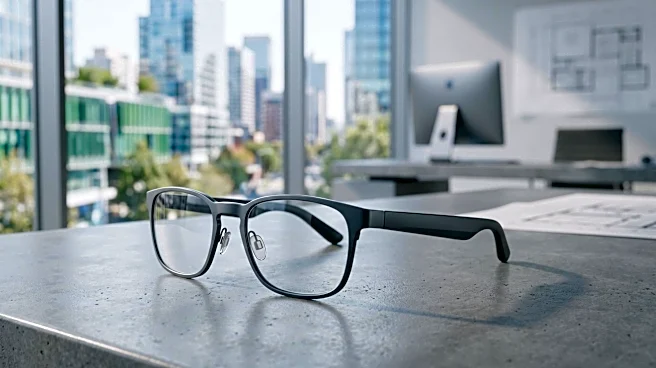
For years, the dream of wearable AI has been clear: a seamless assistant that enhances your daily life. The reality, however, has been less revolutionary. Most smart glasses and other camera-equipped wearables
function as face-mounted notification screens or voice-activated cameras. They are primarily reactive devices. You have to ask them a question, give them a command, or specifically tell them to record something. They see the world, but they don't truly understand it. This limitation is the single biggest barrier to mass adoption. Without a compelling, ever-present reason to wear them, these devices often end up feeling like glorified Bluetooth headsets, more gimmicky than essential. They can tell you the weather if you ask, but they can't tell you that the plant in front of you needs watering without you prompting them.
The Game-Changer: Proactive Visual Intelligence
The one feature that stands to change everything isn't about higher resolution or better zoom. It’s about proactive, context-aware AI. This is the ability for the device to not just see what you’re seeing, but to understand it in real time and offer relevant, unsolicited information. Imagine looking at a historic building and having its history quietly appear in your vision, or glancing at ingredients on a table and being offered a recipe. This capability transforms the camera from a passive recording tool into an active, intelligent sensor. Instead of you asking the AI for help, the AI anticipates your needs based on what it sees, turning the wearable from a novelty into a cognitive partner. Tech companies are racing to build what some call "ambient computing," where AI understands your physical surroundings and provides information without being asked.
From Sci-Fi to Reality: How It Works
This isn't science fiction; the building blocks are already here. It works by combining advanced, lightweight AI models with always-on sensors. The AI is trained to recognize millions of objects, faces, text, and scenarios. When you look at a foreign menu, the glasses could instantly overlay a translation. In a professional setting, a technician could look at a piece of machinery, and the system would identify the model and pull up the relevant maintenance history. This proactive assistance relies on the AI establishing a "normal" baseline for your environment and then flagging what's new or relevant. For the user, the experience feels fluid. Information appears subtly, offering context without being disruptive. It's the difference between asking your phone "What kind of plant is this?" and simply having the answer appear as you look at it.
The Hurdles: Power, Privacy, and Perception
Developing this capability is not without significant challenges. The first is power. Constantly processing a live video feed with on-device AI requires immense computational power, which is a major drain on the tiny batteries inside a pair of glasses. The second, and perhaps larger, hurdle is privacy. An always-on, context-aware camera raises profound questions about data collection and consent, not just for the wearer but for everyone around them. People are rightly concerned about the idea of being recorded without their knowledge. This creates a social acceptance problem that tech companies must solve with transparent privacy policies, clear visual indicators for recording, and robust on-device data processing to minimize what gets sent to the cloud. Building public trust is as crucial as building the technology itself.