
First, What Is Data Loss Prevention?
Let’s start with the basics. Data Loss Prevention, or DLP, isn't about building a bigger wall to keep hackers out—though that’s important too. Instead, DLP is about making sure sensitive information doesn't
get *out*, whether by accident or by malicious intent. Think of it less like a fortress gate and more like an intelligent library system. DLP software identifies, monitors, and protects data in use, in motion (like in an email), and at rest (stored on a server). It can spot a Social Security number in a document being uploaded to a personal Dropbox account, block an email containing classified project names, or alert an administrator when a huge number of files are being downloaded to a USB drive. Its job is to understand what your data is and enforce rules to keep it where it belongs.
The Old Model: A Digital Fortress
For decades, federal IT security followed a simple “castle-and-moat” model. All the important data was stored on servers inside a government building (the castle), protected by a strong network perimeter (the moat). If you were inside the network, you were trusted; if you were outside, you weren't. Security was focused on defending that perimeter. In this world, preventing data loss was relatively straightforward: control the physical devices, lock down the USB ports, and monitor the few exit points to the internet. The boundaries were clear, and the assets were all in one place. This model provided a sense of control, but it was rigid, expensive, and completely unsuited for the modern world.
The Cloud Changes Everything
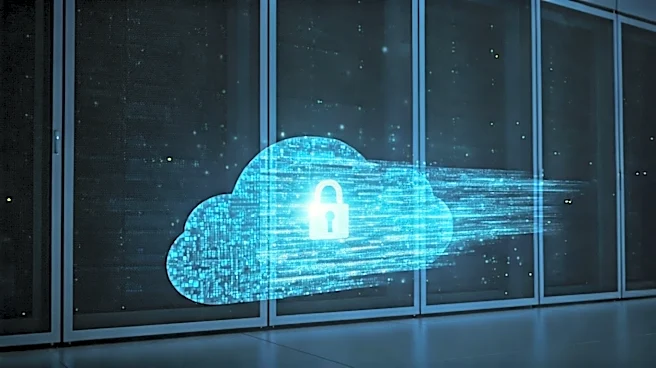
The move to cloud environments like Amazon Web Services (AWS), Microsoft Azure, and Google Cloud shatters the castle-and-moat model. There is no single perimeter anymore. A Department of Veterans Affairs employee might need to access health records from a laptop at home. A scientist from the Department of Energy might collaborate on research data using a web-based application. The “network” is now the internet, and the data no longer lives in a single, government-owned basement server room. This creates three new, massive challenges for data protection. First is 'data sprawl'—information is now spread across countless services and geographic locations. Second is the 'shared responsibility' model, where a cloud provider secures the infrastructure, but the agency is solely responsible for securing the data within it. This often creates dangerous gaps. Finally, the complexity of cloud configurations makes human error, like accidentally making a storage bucket public, the number one cause of data breaches.
Why the Stakes Are Higher for Feds
While a data breach is bad for any company, it’s a potential national crisis for a federal agency. The data at risk isn’t just customer lists or trade secrets; it's the bedrock of our nation's security and public trust. Federal agencies hold everything from the Personally Identifiable Information (PII) of nearly every American citizen (Social Security, taxes, health records) to sensitive law enforcement investigations, diplomatic cables, and classified military intelligence. The infamous 2015 Office of Personnel Management (OPM) hack, which exposed the detailed background-check information of 21.5 million people, gave the world a terrifying preview of the stakes. In a cloud environment, a single misconfiguration could lead to an OPM-level disaster, executed in minutes, not months. The consequences aren't just financial; they can compromise national security, endanger federal employees, and erode citizens' faith in government itself.