






It sounds like a riddle: Amazon Web Services is seeing its fastest growth in years, fueled by soaring demand for AI. Yet, the company's free cash flow is plummeting. How can a good thing—more business—lead to a seemingly bad financial outcome?
First, What Is Free Cash Flow?
Before diving
into the paradox, let’s demystify 'free cash flow' (FCF). Think of it as a company’s pocket money after all the essential bills are paid. Specifically, it’s the cash a company generates from its normal business operations, minus the money it spends on big-ticket items for future growth, known as capital expenditures (or capex). These items include things like buildings, equipment, and technology infrastructure. A high FCF is usually celebrated by investors because it means a company has plenty of cash to pay down debt, buy back stock, pay dividends, or make acquisitions. A negative FCF, on the other hand, means you spent more than you brought in.
The Staggering Cost of the AI Arms Race
The generative AI boom that started in late 2022 has triggered a full-blown infrastructure arms race among tech giants like Amazon, Microsoft, and Alphabet. To power the next generation of AI, these companies must build and equip massive, hyperscale data centers. This isn't cheap. It requires acquiring land, constructing enormous buildings, and filling them with tens of thousands of specialized, power-hungry computer chips from companies like Nvidia. Amazon has committed to spending a colossal $220 billion on capital expenditures in 2026 alone, with plans for that figure to grow 'meaningfully' in 2027. Much of this spending is directed at building out the AI capacity for its booming cloud division, Amazon Web Services (AWS). The demand is so intense that CEO Andy Jassy says capacity is being 'gobbled up' almost as fast as it's installed.
Connecting the Dots: Capex Up, Cash Flow Down
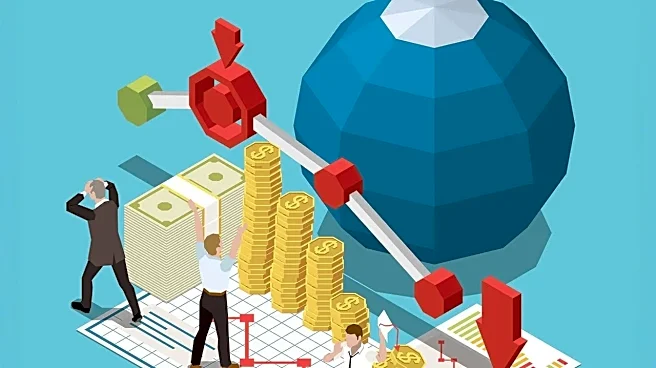
Here’s where the paradox clicks into place. In its recent third-quarter report, Amazon revealed that while its operations are generating plenty of cash, the sheer scale of its capital expenditures 'absolutely swallowed it'. Over the last 12 months, Amazon's free cash flow swung to a negative $42.4 billion, a stark reversal from a positive $14.8 billion in the same period a year earlier. This swing was driven primarily by a massive year-over-year increase in spending on property and equipment, most of it for AI. Even though AWS revenue is surging—up 39.3% in the third quarter, its fastest growth in nearly five years—the upfront cost to support that growth is even greater. Put simply, Amazon has to spend billions today to build the infrastructure that will generate revenue for years to come. That massive capex is subtracted from its operating cash, resulting in negative free cash flow.
A Classic Amazon Bet on the Future
For Amazon, this isn't a sign of a business in trouble; it's a strategic investment in future dominance. The company is famously willing to sacrifice shortterm profits and cash flow to secure longterm market leadership. CEO Andy Jassy has compared the current spending cycle directly to the early days of AWS, when heavy upfront investment built the foundation for a decade of massive returns. The bet is that the AI market is a onceinageneration shift, and the companies that build the essential infrastructure will reap the rewards for years. Investors are watching closely, concerned about how long it will take for these enormous investments to pay off. The immediate stock market reaction to Amazon's earnings was negative, as shareholders digested the scale of the cash burn. However, with a backlog of customer commitments for AWS reaching $578 billion, Amazon is confident it has a 'clear line of sight to attractive financial returns'.