



More Than Just a Faster Computer
First, let's get one thing straight. An ASIC, or Application-Specific Integrated Circuit, isn't just a powerful computer; it's a machine built for a single purpose. Unlike the versatile processor in your laptop or phone that can browse the web, play games,
and edit spreadsheets, an ASIC is a one-trick pony. A Bitcoin ASIC, for example, is engineered from the silicon up to do nothing but solve the specific mathematical puzzles required to mine Bitcoin. Every circuit and transistor is optimized for that one job, making it unbelievably efficient compared to general-purpose hardware like a gaming graphics card (GPU).
The Obvious Detail: Raw, Unrelenting Speed
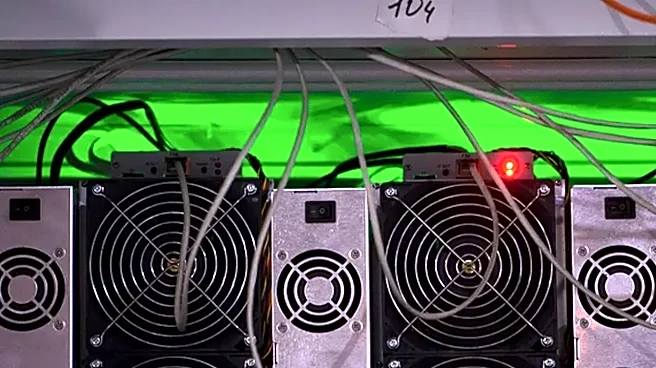
The most visible advantage of this specialization is, of course, speed. When ASICs for Bitcoin were first introduced around 2013, they rendered mining with GPUs on the network almost instantly obsolete. The performance gap is staggering. A single, modern ASIC miner can have the same hashing power as hundreds of thousands of high-end GPUs. This raw power means a higher probability of solving a block and earning cryptocurrency rewards. For major proof-of-work cryptocurrencies like Bitcoin, this has made ASICs the only game in town. Attempting to compete with a GPU is not just impractical; it's economically irrational.
The Hidden Detail: Purpose-Built Inflexibility
Here's the twist everyone misses: the ASIC's greatest strength is also its most consequential weakness. The true "hidden detail" isn't its power, but its profound inflexibility. An ASIC designed for Bitcoin's SHA-256 algorithm can only mine SHA-256 coins. It can't be reprogrammed for another algorithm if a new, more profitable coin emerges. This rigid design creates a brutal cycle of planned obsolescence. As manufacturers release newer, slightly more efficient models, and as the network's mining difficulty automatically increases, older ASICs quickly become unprofitable. They can't be repurposed for gaming or sold on a secondary market like a GPU can. Their only fate is to become electronic waste, often long before the hardware physically fails.
Why This One Detail Changes Everything
This purpose-built inflexibility has three enormous consequences. First, it centralizes the network. Because ASICs are expensive and have a short profitable lifespan, mining has consolidated into the hands of large, well-capitalized corporations that can afford the constant hardware arms race and secure cheap electricity. This is a far cry from the early ideal of decentralized mining accessible to anyone with a home computer. Second, it creates a massive e-waste problem. As entire generations of single-purpose machines become useless, they are often discarded, contributing metric tons of electronic waste. Finally, it locks miners into a specific ecosystem. If the coin they are mining fails or changes its algorithm, their expensive hardware becomes a worthless box. This dynamic has led some crypto projects to adopt "ASIC-resistant" algorithms specifically to encourage mining on more accessible, general-purpose hardware and promote decentralization.