






The Dazzling Software Dream
OpenAI’s developer conferences are masterclasses in selling the future. The latest event was no exception, showcasing a parade of software advancements designed to reshape how we work and create. Announcements often include more powerful and cost-effective
models like GPT-6.1 Sol, new agentic capabilities that allow AI to perform tasks autonomously, and tools that let developers build on OpenAI’s platform with greater ease. The promise is clear: a world where complex problems are solved by intelligent software, where creativity is amplified by AI copilots, and where new applications emerge at lightning speed. It’s a narrative about the power of code and algorithms—the 'mind' of the machine getting exponentially smarter.
The Unseen Engine of AI
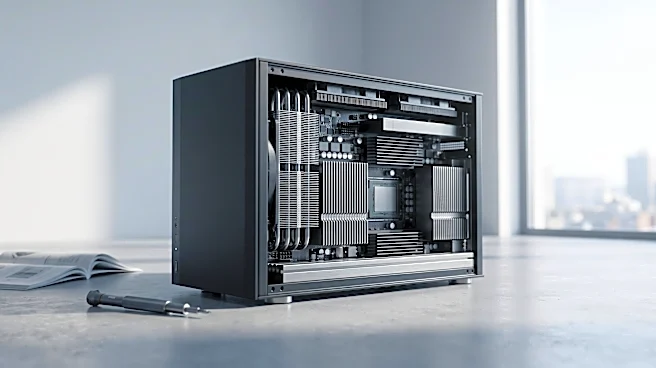
Here’s the catch: every single one of those software promises is powered by a physical thing. Specifically, a graphics processing unit, or GPU. And in the world of AI, one company’s GPUs reign supreme: NVIDIA. Led by its leather-jacket-clad CEO, Jensen Huang, NVIDIA designs the chips that have become the engines of the AI revolution. Think of OpenAI’s models as the world’s most advanced brain; NVIDIA’s hardware is the intricate circulatory system supplying the power and oxygen needed for that brain to think. Without its specialized Tensor Cores and massive memory bandwidth, training and running these colossal models would be impossible. This has given Huang and NVIDIA an unprecedented position of power, making them the indispensable foundation upon which the entire AI industry is built.
A Golden Leash
This dependency isn't just technical; it's economic and strategic. NVIDIA’s top-tier GPUs, like the H100, can cost anywhere from $25,000 to over $40,000 per chip to purchase outright. For companies like OpenAI, which require tens of thousands of these chips, the cost runs into the billions. In fact, OpenAI and NVIDIA recently announced a massive partnership, with OpenAI planning to deploy millions of NVIDIA GPUs in its data centers, backed by a potential investment from NVIDIA of up to $100 billion. While framed as a partnership, it highlights the immense leverage NVIDIA holds. OpenAI may be the one making headlines, but its ability to innovate and scale is directly tied to the supply, cost, and performance of NVIDIA’s hardware. It’s a symbiotic relationship, but one where the hardware maker can always set the terms.
The Escape Plan
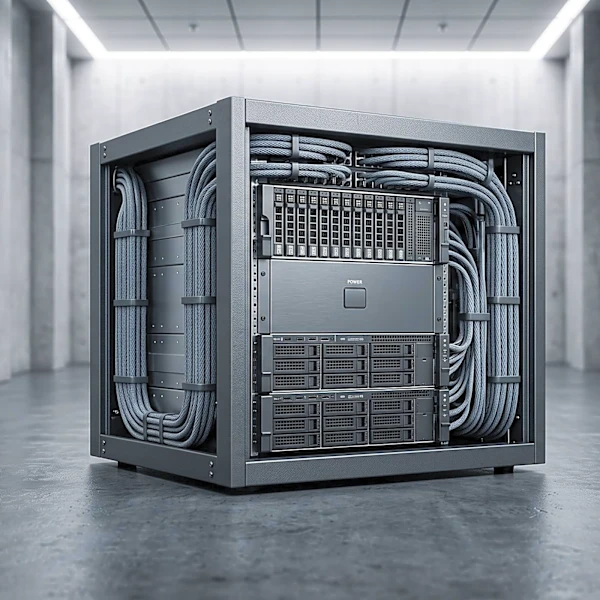
No company wants to be this dependent on a single supplier. The astronomical cost and strategic vulnerability have pushed major AI players, including OpenAI, to seek alternatives. Several tech giants are developing their own custom AI chips, from Google's TPUs and Amazon's Trainium to AMD's competing MI300 series GPUs. Most notably, OpenAI itself has been actively working to design its own AI accelerators. The company has hired top talent from Google's TPU team and partnered with Broadcom to develop custom chips, with reports suggesting mass production could begin as soon as 2026. One such chip, reportedly named 'Jalapeño,' is designed for inference—the process of running a model—to make AI cheaper and faster. This move isn't just about saving money; it’s about taking control of its own destiny, as Broadcom's CEO aptly put it.