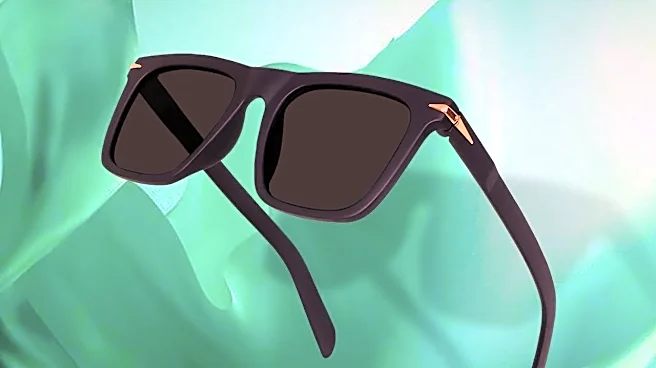

The Problem Everyone Sees
For years, the dream of all-day, truly wearable smart glasses has been haunted by a fundamental trade-off. To power the processors, sensors, and displays, you need a decent-sized battery. But a big battery means
bulk, weight, and heat, usually concentrated in one awkward spot on the frame. This creates glasses that are uncomfortable, unbalanced, and scream "tech gadget" rather than stylish eyewear. Early adopters might tolerate this, but for smart glasses to become as common as smartphones, they need to be something you forget you’re even wearing. This single issue—making the power source invisible without sacrificing performance—has been the category's biggest design headache.
It's Not One Battery, It's Many
Here’s the detail everyone is missing: The future isn’t a single, better battery. It's a distributed power system. Instead of one solid block of lithium-ion, designers are increasingly working with new, flexible battery technologies that can be broken up and integrated throughout the entire structure of the glasses. Think less of a brick and more of a web. These could be ultra-thin, semi-solid-state batteries that are shaped to fit inside the slender arms of the frames or even flexible, toothpaste-like batteries that can be printed into custom shapes. This approach allows designers to spread the power source, and therefore the weight, evenly across the whole device. It fundamentally changes the industrial design from being 'built around a battery' to 'built with a battery'.
The End of the 'Tech-Face' Look
This shift from a single battery to a distributed system is more than just a technical tweak; it's the key to social acceptance. When weight is perfectly balanced, glasses are more comfortable for all-day wear, eliminating the pressure points on the nose and ears that plague current models. More importantly, it allows smart glasses to finally look and feel like regular glasses. By hiding micro-batteries within the normal contours of a frame, manufacturers can ditch the bulky, awkward designs that have held the market back. The goal is to create a device so discreet that no one can tell you’re wearing a piece of advanced technology, solving a major hurdle that has made people hesitant to wear them in public.
More Than Just All-Day Power
A distributed power system doesn't just improve comfort and aesthetics; it unlocks a new tier of performance. With power sources spread out, heat dissipation is far more manageable, preventing the uncomfortable hot spots that can occur near the temple. This thermal efficiency allows for the use of more powerful processors, like dedicated AI chips (NPUs), that can handle on-device processing for tasks like real-time translation and object recognition without draining the battery in hours. It means the glasses can become more than just a notification screen for your phone, evolving into a truly independent, context-aware computing platform. This improved efficiency is what will finally give smart glasses the power they need to run meaningful applications all day long, making them an indispensable tool rather than a novelty.