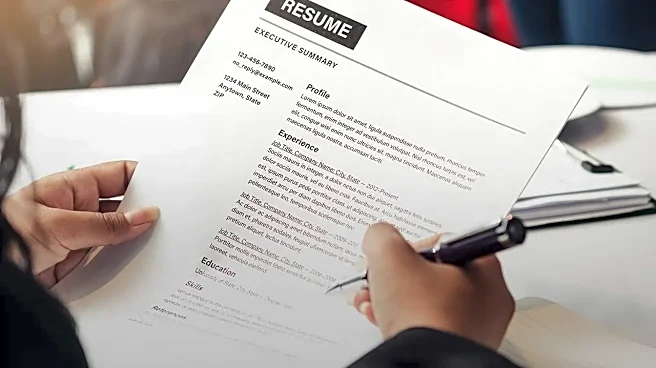

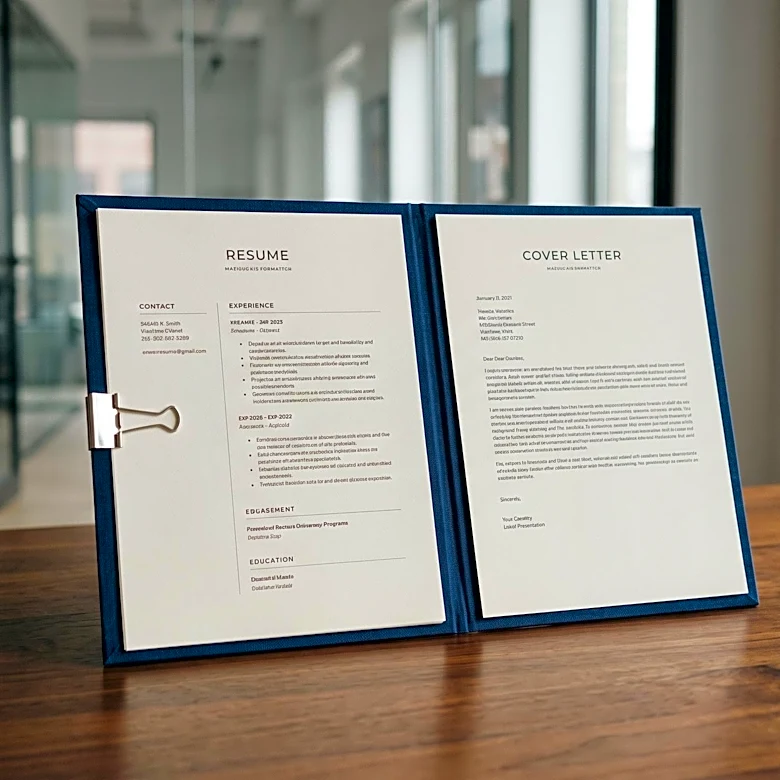




AI tools like Claude can be a massive time-saver in a job search, but treating their output as final is a mistake. Before you send that AI-generated resume or cover letter, run it through this essential human-led quality check.
Check for Generic, Soulless Language
AI has a habit of using
safe, boilerplate phrases that sound professional but lack impact. Does your cover letter open with 'I am writing to express my sincere interest'? Does your resume describe you as a 'results-driven team player'? Recruiters have seen these phrases thousands of times, and they often signal a low-effort application. Your job is to replace the clichés with specific, evidence-based statements. Instead of a generic adjective, provide a concrete achievement: 'I led a three-person team to increase Q3 sales by 15% by implementing a new CRM workflow.' Specifics prove your value in a way buzzwords never can.
Verify Factual Accuracy (Especially About You)
This is the most critical check. Large Language Models can 'hallucinate'—inventing facts, figures, or even entire job experiences with stunning confidence. When you ask an AI to 'enhance' your experience, it might embellish beyond the truth. Double-check every single claim. Did you really increase efficiency by 40%, or was it closer to 20%? Do you truly have 'expert-level' proficiency in a software you've only used twice? Misrepresenting your history, even if the AI suggested it, is a fast track to disqualification and can seriously damage your professional reputation. You must be able to speak to every single line on your resume in an interview.
Tailor It to the Specific Job Description
A one-size-fitsall resume is a relic of the past. While you can feed a job description to Claude, the AI might miss the nuance. Your next task is a manual, sidebyside comparison. Does your resume's 'Skills' section include the exact keywords from the 'Requirements' list? Has the cover letter addressed the core challenges mentioned in the job posting? Manually align the language. If the posting emphasizes 'datadriven decision making,' your documents need to reflect that with examples from your past roles, not just by listing 'data analysis' as a skill.
Optimize for Applicant Tracking Systems (ATS)
Before a human ever sees your resume, it almost certainly has to pass through an Applicant Tracking System (ATS). These bots scan for keywords and, crucially, require simple formatting. An AI might generate a visually creative resume with columns, graphics, or nonstandard fonts that an ATS cannot parse. To be safe, stick to a clean, singlecolumn layout with standard section headings like 'Work Experience' and 'Education'. Ensure you’ve included the exact job title and skills mentioned in the listing to pass this initial automated screen.
Inject Your Authentic Voice and Personality
A resume is a factual document, but a cover letter is a chance to show who you are. AIgenerated text is often grammatically perfect but tonally flat and devoid of personality. Read the documents aloud. Does it sound like you? Go through and tweak sentences to match your natural communication style. Add a line that reveals your genuine enthusiasm for the company's mission or a recent project they launched. Recruiters read hundreds of applications, and a flicker of real, authentic interest can make yours memorable.
Proofread for 'AIisms' and Awkward Phrasing
As you use AI more, you'll start to notice its stylistic tics. It has a tendency to overuse certain transitional phrases ('Furthermore,' 'Moreover,' 'In conclusion') and can create sentences that are grammatically correct but logically clunky or repetitive. The final step is a classic, oldfashioned proofread, because spellcheck won't catch awkwardness. Print the documents. Read them backward, one sentence at a time. This mental trick helps you spot odd phrasing and subtle errors that your brain—and the AI—might have glossed over. You are the final editor, and the ultimate responsibility for the document is yours.