







The Real Estate Company in Tech Clothing
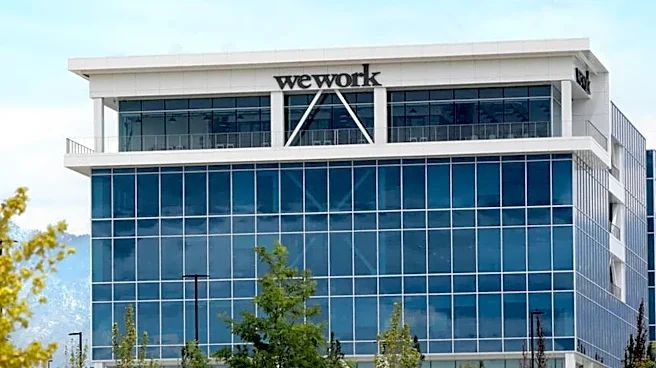
At its core, WeWork's business model was straightforward and very old: lease large commercial real estate spaces long-term, divide them into smaller, trendier offices, and rent them out on flexible, short-term contracts. This is a real estate arbitrage
business. But from the beginning, co-founder Adam Neumann sold a different story. He wasn't just renting desks; he was building a 'physical social network' and 'elevating the world's consciousness'. The company was wrapped in the language of technology, positioning itself alongside asset-light giants like Uber and Airbnb. This narrative was a deliberate choice, designed to attract venture capital and justify a valuation far beyond what any traditional real estate firm could command. Tech companies trade at huge multiples of their revenue; real estate companies do not. This single decision—to identify as a tech company—was the seed of both its meteoric rise and its inevitable downfall.
The SoftBank Money Machine
The 'tech' narrative worked spectacularly well on one key investor: Masayoshi Son, the head of SoftBank's colossal Vision Fund. Starting in 2017, Son began pouring billions into WeWork, reportedly telling Neumann he wasn't thinking big enough. This wasn't just an investment; it was a gusher of capital that validated the tech fantasy and made it company doctrine. With SoftBank's backing, WeWork's valuation soared to a dizzying $47 billion by early 2019. This massive infusion of cash was the 'hidden decision's' key accomplice. It removed all fiscal discipline, encouraging growth at any cost and fueling an aggressive global expansion that ignored profitability. The company was effectively lighting money on fire, burning through cash on lavish projects and an unsustainable business model, all because the next check from SoftBank seemed guaranteed.
When The Story Met The S-1
The party stopped on August 14, 2019, the day WeWork filed its S-1 document to go public. An S-1 is a prospectus that lays a company's financials bare for potential public market investors. For the first time, the world could look under the hood, and what they saw was horrifying. The filing revealed staggering losses—nearly $2 billion in losses on $1.8 billion in revenue in 2018—with no path to profitability. More damagingly, it exposed a labyrinth of conflicts of interest and eyebrow-raising corporate governance, including Neumann personally trademarking the word 'We' and selling it back to the company. The bizarre, cult-like language about 'consciousness' collided with the harsh reality of its numbers. The S-1 confirmed what skeptics had long suspected: WeWork wasn't a tech company at all; it was a deeply unprofitable real estate company with a charismatic frontman.
The Six-Week Collapse
The backlash from the S-1 was immediate and brutal. In the space of about six weeks, the company's marketed valuation collapsed from $47 billion to under $10 billion. The planned IPO was pulled, and Neumann was forced out as CEO. SoftBank, the enabler of the 'growth at all costs' strategy, was forced to step in with a rescue package to save the company from bankruptcy, taking a massive loss on its investment. The very decision that had fueled the incredible hype—pretending to be a tech company—was precisely what made the public market rejection so swift and total. The story that had been so compelling in private boardrooms was exposed as a fantasy under the bright lights of public scrutiny.