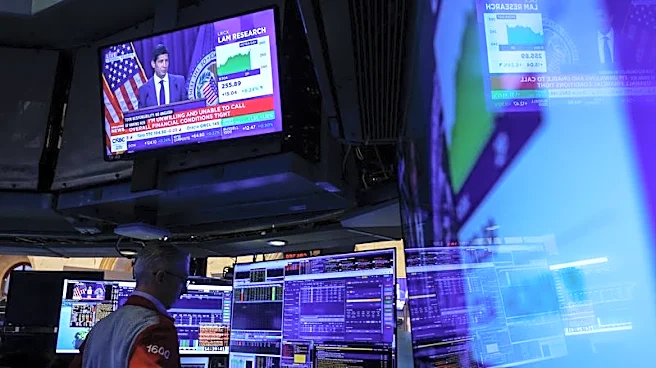







When Meta Platforms reports its earnings, investors across the semiconductor industry pay close attention. It seems odd—why would a social media giant’s finances dictate the fortunes of chipmakers? The answer lies in one crucial metric.
It’s All About the CapEx
The magic number
is capital expenditure, or CapEx. This figure represents how much money a company spends on physical assets, and for Meta, that means a colossal investment in data centers. In its third-quarter 2026 earnings report, Meta revealed its spending plans are immense, with a CapEx forecast between $135 billion and $145 billion for the year. This budget isn't just for show; it's a direct reflection of the hardware the company needs to buy to power its global operations and, most importantly, its artificial intelligence ambitions. When Meta signals it will spend more, chipmakers and their investors see a direct forecast of future orders. Conversely, any hint of a spending slowdown sends a chill through the entire sector.
An Insatiable Appetite for AI Chips
Meta isn't just buying generic processors. The AI revolution runs on specialized, high-performance chips known as GPUs, or graphics processing units, and other custom accelerators. These are the engines required for training and running massive AI models, like the ones that power Instagram’s recommendation algorithms, Facebook's ad targeting, and Meta's new AI assistant, Muse. Nvidia has been the primary beneficiary of this spending boom, but competitors like AMD and Broadcom are also key suppliers. In fact, these chipmakers have signaled so much confidence in Meta’s roadmap that they expressed interest in buying up to $5 billion of Meta's stock to help fund its expansion, creating a circular flow of capital that underscores their symbiotic relationship.
From Social Feeds to AI Factories
Meta's transformation into an AI-first company has turned its data centers into virtual factories. Every photo tagged, every Reel recommended, and every query posed to an AI assistant requires immense computational power. The company is not only buying chips from outside vendors but is also aggressively developing its own custom silicon, known as Meta Training and Inference Accelerators (MTIA), in partnership with Broadcom. This dual approach—buying the best on the market while also building in-house—highlights the sheer scale of its needs. For investors, this signals that Meta’s demand for computing power is both massive and non-negotiable for its future growth, providing a reliable demand floor for the semiconductor industry.
A Barometer for Big Tech Spending
Meta is one of a handful of 'hyperscalers'—along with Google, Amazon, and Microsoft—whose collective spending can move entire markets. Because Meta is so public and detailed about its CapEx plans, its earnings report has become a bellwether for the health of the entire AI infrastructure buildout. However, the scale of this spending has recently spooked some investors. Meta’s Q3 2026 report showed the company had negative free cash flow for the first time in a decade, meaning its AI investments outpaced the cash its business generated. This raises questions about sustainability, but for chip investors, the primary signal remains clear: as long as Meta is committed to spending hundreds of billions on AI, the demand for highend semiconductors will remain robust.