





The Smart Home's Unseen Traffic Cop
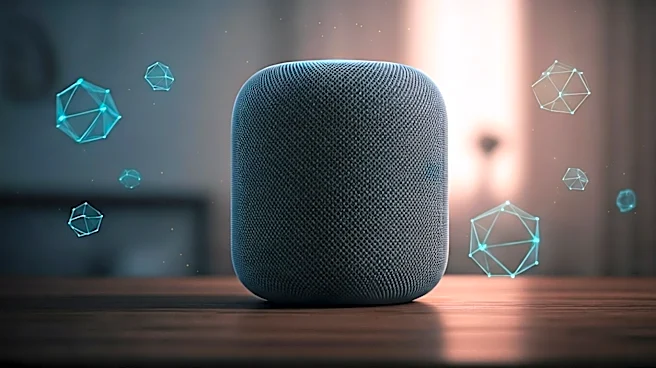
Beneath its fabric-covered shell, every modern HomePod and HomePod mini is a secret weapon for your smart home. It functions as a Thread border router. In plain English, think of it as the manager of a super-fast, super-reliable express lane for your smart devices.
Gadgets like smart lights, locks, and sensors that use the Thread protocol can communicate directly with each other through the HomePod, creating a mesh network that's faster and more resilient than relying on Wi-Fi alone. This matters because it’s not just a feature you use; it’s a foundational upgrade that makes your entire smart home run better. Your lights respond instantly, and your sensors don’t drop connection. The HomePod isn't just in your home; it's running it.
Your Easiest Home Theater Upgrade
If you own an Apple TV 4K, this is a game-changer. You can set a HomePod, or better yet, a stereo pair of them, as the default audio output for your Apple TV. The setup takes about 30 seconds. The result? You’ve just created a surprisingly powerful and immersive home theater system that supports Dolby Atmos spatial audio. The sound is rich, cinematic, and perfectly synced, without the mess of wires or the complexity of a traditional receiver and speaker setup. It turns a casual movie night into a genuine audio experience. This isn't just about playing music; it's about becoming the audio heart of your living room entertainment.
A Walkie-Talkie for Your Whole House
The Intercom feature sounds simple, but its usefulness is profound in a busy household. You can use any Apple device—your iPhone, Apple Watch, or another HomePod—to broadcast a message to every HomePod in the house. No more shouting “Dinner’s ready!” up the stairs. A quick “Hey Siri, intercom ‘we’re leaving in five minutes’” sends the message to every room. It even pushes a notification to family members’ iPhones if they’re out of the house. It's a simple, elegant solution to a common household communication problem, seamlessly integrating your devices into a unified system.
Your Ears When You're Away
This feature provides a quiet layer of security and peace of mind. Your HomePod is always on and always listening, but not just for “Hey Siri.” With Sound Recognition enabled, it can also listen for the specific frequencies of smoke and carbon monoxide alarms. If it detects one, it will immediately send a critical alert to your iPhone, no matter where you are. For anyone who has ever worried if they’d hear an alarm while away or sleeping soundly, this turns an entertainment device into a practical safety tool, leveraging the hardware you already own for a purpose that truly matters.
The Audiophile's Secret Weapon
Many smart speakers are built for convenience, not quality. They play compressed audio that’s good enough for podcasts or background music. The HomePod, however, is built for audiophiles in disguise. It fully supports Apple Music’s Lossless and Hi-Res Lossless formats, delivering true, uncompressed, CD-quality (or better) audio. Combined with its computational audio that adjusts the sound to the room’s acoustics, you're getting a high-fidelity listening experience that punches far above its weight class. For anyone who genuinely cares about how their music sounds, this feature alone elevates the HomePod from a smart gadget to a serious piece of audio equipment.
It Actually Knows Who You Are
In a shared home, a generic smart assistant can be a source of frustration, mixing up calendars and music tastes. The HomePod solves this with multi-user voice recognition. It can distinguish between up to six different voices in a household. When you ask for your daily update, it accesses your calendar, not your partner's. When you ask it to play some music, it taps into your playlists, not your teenager's. This personal touch makes the HomePod feel less like a shared utility and more like a personal assistant for every member of the family, making interactions smoother and far more useful.