









The Speed of Light: A Physics Win and a Loss
One of the most fascinating points of contention is latency—the delay it takes for data to travel. In one corner, engineers champion a key advantage: light travels faster in the vacuum of space than it does through glass fiber-optic cables on the ground.
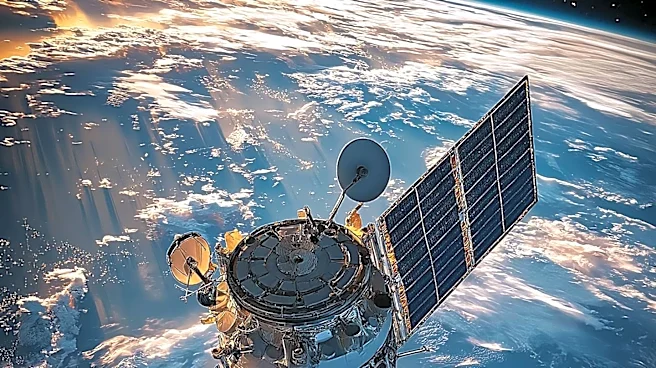
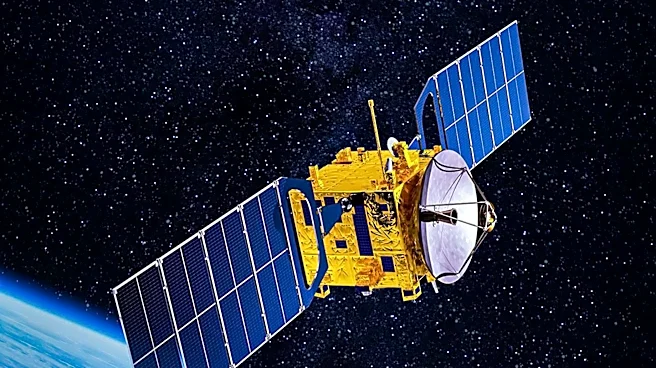
For very long distances, like New York to London, bouncing signals between satellites with lasers can theoretically beat fiber. But here's the catch that other engineers quickly point out: for most internet traffic, the journey isn't a straight shot across an ocean. Your data has to travel from your house up to a satellite and back down to a ground station. That round trip, even at low-earth orbit, adds precious milliseconds of delay that a direct fiber connection doesn't have. While LEO satellite latency is a massive improvement over old GEO satellites (think 20-50ms vs 600ms+), it still struggles to consistently beat the single-digit latency of a good fiber connection.
Bandwidth for All, or a Congestion Nightmare?
The promise of LEO internet is bringing high-speed broadband to places that have none. Early adopters often see incredible download speeds. However, experienced network engineers see a familiar problem on the horizon: congestion. A satellite, or a cluster of them, flying over an area has a finite amount of total bandwidth to share among all users below. As more people in a specific geographic "cell" sign up and use the service, that shared resource gets divided, and speeds can drop dramatically, especially during peak evening hours. We've already seen reports of some areas becoming so popular that new sign-ups are waitlisted and existing users see performance decline. While companies like SpaceX are constantly launching more satellites to add capacity, some engineers argue it's a constant race against demand. The core disagreement is whether the model can scale to serve dense populations or if it will always be best suited for low-density, rural areas where the user-to-satellite ratio remains favorable.
An Orbital Marvel vs. A Debris Hazard
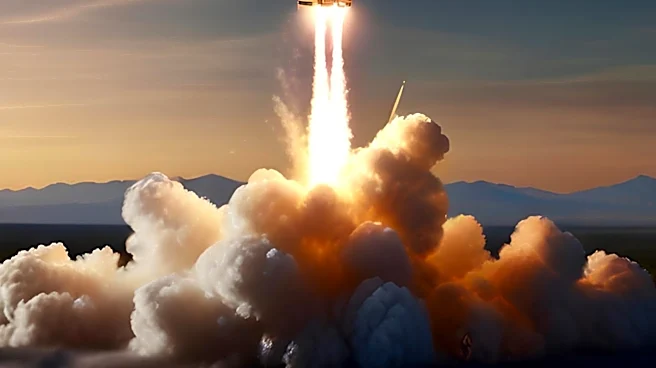
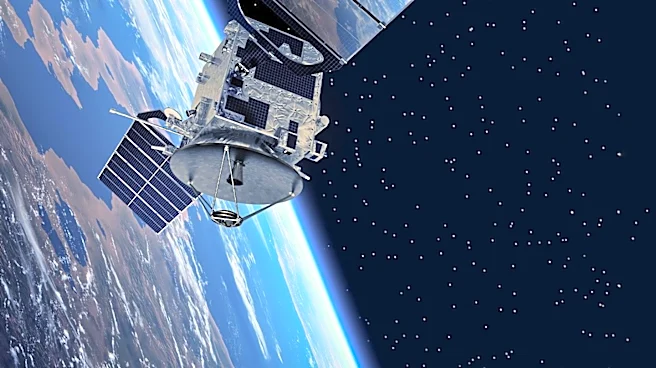
The sheer scale of deploying thousands of satellites is an engineering marvel. Companies like SpaceX, Amazon, and OneWeb are building and launching satellites at an unprecedented rate. This has only been possible due to massive reductions in launch and manufacturing costs. This rapid deployment, however, is a source of major debate among the aerospace and engineering communities. One side sees it as a necessary step to build a resilient, global network. The other side raises serious concerns about space debris. With tens of thousands of planned satellites, the risk of collisions increases, which could create a cascade of debris (a phenomenon known as the Kessler syndrome) that endangers all satellites. While operators are building autonomous collision avoidance systems into their satellites, many engineers argue the long-term sustainability is a massive, unsolved problem. The debate isn't just about functionality, but about the responsible stewardship of low-earth orbit.
The Rural Savior or the Urban Non-Starter?
Perhaps the one area where most engineers find common ground is that LEO satellite internet is a game-changer for rural and underserved communities. For millions of people, it's the first time they've had access to true high-speed internet. The disagreement arises when discussing its role in more populated suburban and urban markets. In these areas, satellite must compete with established fiber and cable infrastructure. Given the high upfront equipment costs and monthly fees that are often comparable to or higher than terrestrial options, the value proposition is less clear. Engineers on the skeptical side argue that satellite internet will never be able to compete on price and performance with fiber in a dense area due to the physics of shared bandwidth. Proponents, however, believe that as the technology matures and costs come down, it could become a viable competitor, offering an alternative to terrestrial monopolies.
The Financials: Engineering Miracle or Black Hole?
Ultimately, the long-term viability of these massive constellations is a question of economics, which is its own engineering problem. The investment required is astronomical, with companies pouring billions of dollars into research, manufacturing, and launches. Some engineers see a clear path to profitability by connecting a vast, untapped market of rural customers, aviation, and maritime clients. Others are more skeptical, pointing to the high costs of not just launching the satellites, but constantly replenishing them—LEO satellites have a limited lifespan of about 5-7 years. They argue that the revenue from rural users alone may not be enough to sustain such a capital-intensive operation, leading to a precarious financial future. The disagreement centers on whether the business model, as currently designed, is a sustainable revolution or a repeat of the failed satellite internet ventures from the 1990s.