

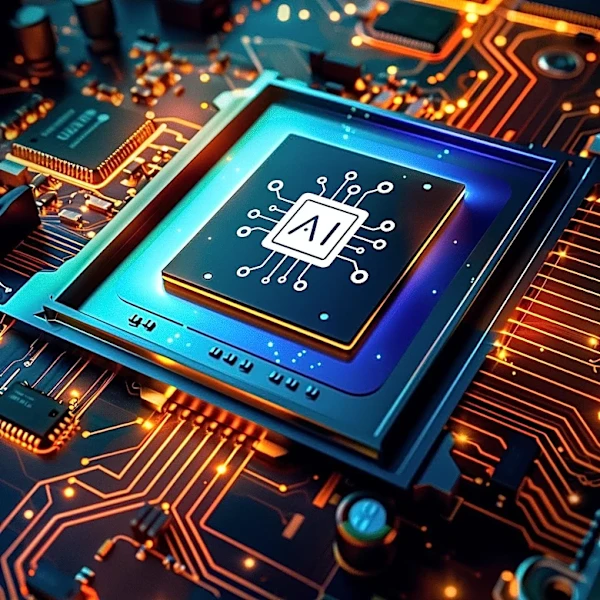





Every time you open an app, watch a video, or see a loading bar disappear, you're witnessing a silent, lightning-fast miracle. It's powered by the single most important chip in your device: the Central Processing Unit, or CPU.
The Brain of the Operation
Think of the CPU as the 'brain'
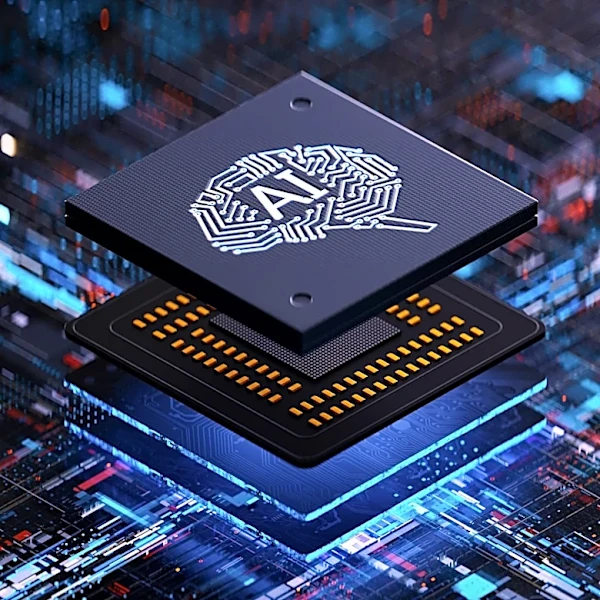
of your computer. It’s a tiny, complex chip made of billions of microscopic transistors that acts as the primary component for executing instructions. If your computer were a symphony orchestra, the CPU would be the conductor, making sure every section plays its part at the right time. Its job isn’t to store your files—that’s for your hard drive and memory (RAM). Instead, the CPU’s purpose is to read instructions from software, perform calculations, and manage the flow of data across all the other components. Every single action, from a mouse click to a complex video render, is broken down into basic commands that the CPU must process.
The Three-Step Dance of Computing
At its core, a CPU performs a simple, relentless, three-step loop for every single instruction. This is known as the fetch-decode-execute cycle. 1. Fetch: The CPU retrieves, or 'fetches,' the next instruction from the computer's memory (RAM). It knows where to look thanks to a special register called the program counter, which always points to the next instruction's address. 2. Decode: Once fetched, the instruction—which is just a pattern of 1s and 0s—is sent to the CPU's control unit. This unit decodes the binary pattern to understand what operation needs to be done, whether it's adding two numbers, moving data, or jumping to a different part of the program. 3. Execute: The decoded command is finally carried out. The CPU's Arithmetic Logic Unit (ALU) performs any math or logical comparisons, and the result is stored in a register or sent back to memory. This cycle happens billions of times per second, creating the seamless experience of using modern software.
From Human Ideas to Machine Language
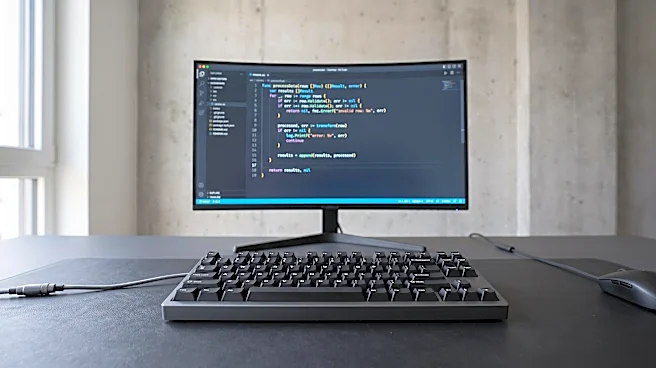
Programmers don't write software in the 1s and 0s that a CPU understands. That would be impossibly tedious. Instead, they use 'high-level' programming languages like Python, Java, or C++, which use more human-readable commands. But how do these high-level ideas become something a CPU can execute? Through a translation process. A special program called a 'compiler' or an 'interpreter' reads the human-written code and converts it into the low-level machine code instructions that are specific to a particular CPU's architecture. Every piece of software on your machine, from the operating system to your web browser, has been translated into these fundamental instructions that the CPU can then fetch, decode, and execute.
Your Daily Apps, Powered by the CPU
The CPU's work is everywhere, even if it's invisible. When you load a webpage, your CPU executes the code that renders the layout, displays images, and runs interactive scripts. When you're playing a video game, the CPU is responsible for the game's logic, the artificial intelligence of nonplayer characters, and physics calculations, while often delegating the visual rendering to the graphics card (GPU). In a spreadsheet program, every time you enter a formula and hit 'Enter,' the CPU performs the specified calculations instantly. Even background processes, like your operating system checking for updates or running an antivirus scan, are managed and executed by the CPU, often on different 'cores' to allow for smooth multitasking.