






An Accidental Revolution After Dark
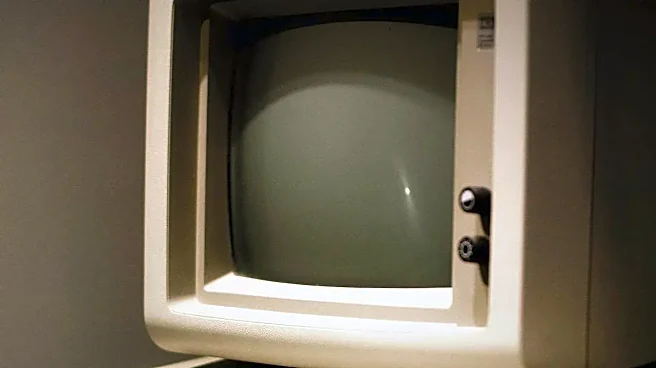
In 1969, CompuServe wasn't trying to build the future; it was a Columbus, Ohio, time-sharing company helping businesses run calculations on its massive mainframe computers. But those powerful machines, worth a fortune, sat mostly idle after business hours.
Seeing an opportunity, the company decided to sell that unused time to the nascent community of personal computer hobbyists. Starting in 1979, for a fee, anyone with a PC and a modem could dial into the CompuServe Information Service (CIS). This wasn't the internet as we know it—it was a closed, proprietary system, a 'walled garden' of information and services. Yet, within those walls, the foundational elements of online culture began to bloom. Users weren't just accessing data; they were connecting with each other for the first time.
The First Social Network
Before Facebook walls or Twitter threads, there were CompuServe's 'Special Interest Groups' (SIGs) and the CB Simulator. The SIGs were forums dedicated to thousands of topics, from NASA to needlepoint, where users with shared passions could post messages and share files. These were the original subreddits, moderated by system operators ('sysops') and fostering tight-knit communities. Even more revolutionary was the CB Simulator, launched in 1980. Modeled on the CB radio craze, it was the first public, real-time chat service. People from around the world could pick a handle, join a channel, and simply talk. It was here that online relationships formed, arguments raged, and one of the first online weddings took place. The company quickly realized that what people wanted most wasn't just data, but human connection.
GIFs, Email, and Early E-Commerce
CompuServe’s influence extends to the very pixels on our screens. In 1987, to provide a color image format that would load efficiently over slow modems, a team led by Steve Wilhite created the Graphics Interchange Format, or GIF. That file format, born of necessity, is now a pillar of internet culture. The service also gave many Americans their first taste of electronic mail. A user's identity was a string of numbers, like '74352,1314', a badge of honor for early adopters. In 1989, CompuServe built a bridge allowing its users to exchange emails with the broader, academic-focused internet, a critical link between the closed commercial world and the open network that would soon dominate. It also pioneered online news, shopping, and travel booking, proving the commercial viability of a connected world.
The Walled Garden Couldn't Hold
For all its innovation, CompuServe's dominance was fleeting. Its business model was its undoing. Access was expensive, often billed by the hour at rates that could reach over $10. The interface was text-heavy and catered to a technically proficient user base. In the early 1990s, a brash competitor, America Online (AOL), entered the scene with a vibrant graphical interface, aggressive marketing (flooding mailboxes with free trial disks), and a revolutionary flat-rate monthly subscription. Suddenly, the metered, serious world of CompuServe felt dated and overpriced. The final blow came from the rise of the open World Wide Web itself. As browsers like Netscape made the internet accessible to all, the value of a proprietary, closed network evaporated. CompuServe was slow to adapt, and by 1997, it was acquired by its rival, AOL.