






From 'Security Pariah' to 'Trustworthy Computing'
In the early 2000s, Microsoft was the undisputed king of software and the undisputed king of security vulnerabilities. Viruses like Code Red and Nimda exploited flaws in Windows and brought businesses to a standstill. The situation became so dire that
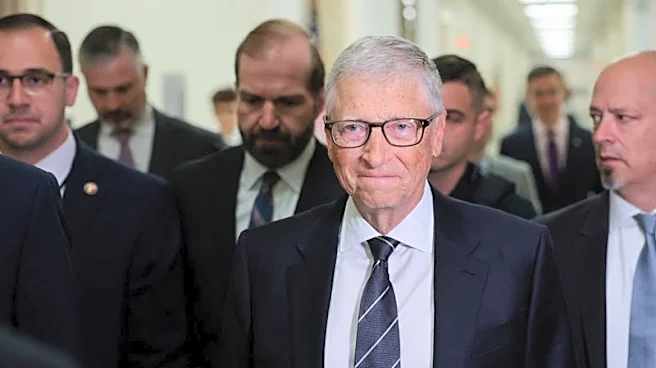
in January 2002, Bill Gates sent a company-wide memo initiating the "Trustworthy Computing" directive. He declared that security would now take precedence over new features, a seismic cultural shift for the company. The memo forced a halt in development as thousands of engineers underwent intensive security training. It was the start of a long, expensive, and often painful journey to embed security into the company’s DNA, shifting from a reactive posture to one that, for the first time, prioritized defense.
The Cloud Was the Game Changer
The single biggest catalyst for Microsoft's transformation was its pivot to the cloud with Azure and Microsoft 365. Suddenly, the company wasn't just shipping software for others to secure; it was responsible for protecting the data of millions of enterprise customers on its own servers. This forced Microsoft to develop a 'Zero Trust' security model, which assumes no one is safe by default and verifies every access request. The tools and expertise it built to protect its own massive infrastructure became the foundation for the commercial security products it would later sell. The cloud gave Microsoft an unprecedented, real-time view of the global threat landscape.
Weaponizing a Trillion-Signal Advantage
Microsoft's greatest advantage is its sheer scale. The company now processes over 100 trillion security signals every single day from its vast ecosystem of Windows devices, Azure cloud services, and Office applications. This firehose of data feeds a massive AI engine that can spot emerging threats and patterns that no single company could ever see on its own. This intelligence underpins its flagship security products, Microsoft Sentinel (a security information and event management, or SIEM, tool) and Microsoft Defender (an extended detection and response, or XDR, platform). By integrating these tools, Microsoft offers a unified dashboard that simplifies a notoriously complex and fragmented market.
A Strategy of Smart Acquisitions
While building its own tools, Microsoft also went on a strategic shopping spree, acquiring dozens of specialized cybersecurity firms to fill gaps and accelerate its capabilities. Early purchases like Sybari in 2005 laid the groundwork for email security. Later, acquisitions like Adallom (2015) for cloud security, Hexadite (2017) for automated incident response, and RiskIQ (2021) for threat intelligence were folded into the growing platform. Each purchase was less about buying revenue and more about acquiring specific technologies and expertise to be integrated into the mothership, creating a security portfolio that now generates tens of billions in annual revenue, more than many pure-play security vendors.
So, Are They Really 'Untouchable'?
In a word, no. The headline's claim is strong, but reality is more complex. Microsoft’s massive size and market dominance also make it a colossal target. High-profile breaches, such as the 2023 Storm-0558 incident where Chinese-affiliated hackers accessed the emails of U.S. government officials, serve as stark reminders that the company is far from impenetrable. The U.S. government's Cyber Safety Review Board issued a scathing report on that breach, criticizing Microsoft's security culture. These incidents have forced the company to launch yet another major security overhaul, the Secure Future Initiative, doubling down on making its products secure by default. While not literally untouchable, its integrated platform, massive data advantage, and deep enterprise entrenchment have made it an indispensable, and perhaps unavoidable, force in the cybersecurity world.