









As Meta reports its earnings, all eyes are on the colossal sums spent on AI. But the headline capital expenditure figure, while staggering, doesn't tell the whole story. The real measure of success lies in a far more revealing metric.
The Capex Obsession
In the high-stakes
world of artificial intelligence, capital expenditure, or capex, has become the headline act. For tech giants like Meta, it’s a number that signals ambition and commitment. The company has projected full-year capital spending to reach as high as $145 billion, a figure that understandably grabs investor attention. This spending spree, fueling the development of massive AI models and data centers, has led to soaring costs, with expenses rising much faster than revenue. In the most recent quarter, Meta's free cash flow even turned negative, a clear sign that the company is spending more on expansion than it's generating from operations. But focusing solely on the sticker price of this AI arms race is like judging a champion racehorse by the cost of its stable. It tells you about the investment, but not the performance. A high capex number doesn't guarantee an efficient, powerful AI engine; it only confirms a very large check was written.
The Real Bottleneck: Interconnect Bandwidth
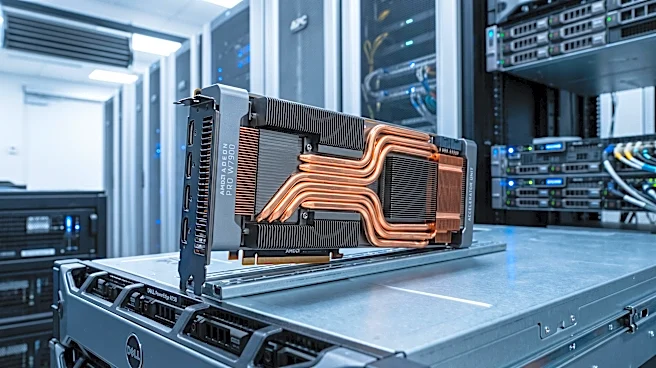
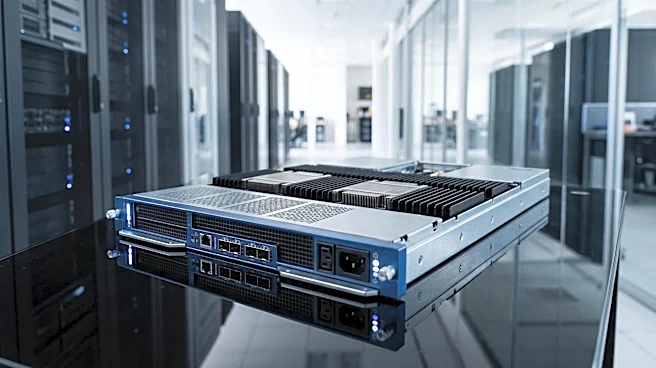
The one metric that truly deserves more attention is interconnect bandwidth. In simple terms, this is the speed at which all the expensive AI chips (GPUs) can communicate with each other. Modern AI doesn't run on a single chip; it relies on massive clusters of thousands of GPUs working in concert. If these GPUs can't share data rapidly, they sit idle, waiting. This turns a billion-dollar supercomputer into a traffic jam. High-speed interconnects like NVIDIA’s NVLink or the broader InfiniBand technology act as the central nervous system for an AI data center. They are the high-speed data highways that allow for the constant exchange of parameters and datasets required to train and run large models. Without sufficient bandwidth, the performance of the entire system collapses, rendering a significant portion of that massive capex spend useless. It's the critical link that turns raw computing power into actual AI progress.
Why It's Crucial for Meta's Future
For Meta, this isn't an abstract technical detail—it's central to its entire strategy. The company’s ambitions, from the AI-powered recommendation engines that drive ad revenue to the immersive worlds of the metaverse and its new 'Muse' AI assistant, all depend on massive, seamlessly coordinated AI models. The advertising business is already seeing a lift from AI, with ad impressions and prices climbing. This shows that the infrastructure, when working correctly, delivers returns. However, as Meta builds what it calls 'superclusters' of computing power, the risk of an interconnect bottleneck grows exponentially. If the network fabric can't keep pace, the company will face a crisis of efficiency: an ever-growing bill for GPUs that aren't delivering their full potential. This would mean wasted capital, slower product development, and a serious competitive disadvantage. True ROI in AI isn't just about owning the most chips; it's about running the most efficient 'AI factory'.
What to Listen For on the Earnings Call
You won’t hear Mark Zuckerberg or his finance chief explicitly state their 'interconnect bandwidth per dollar of capex'. But you can listen for the clues. Pay attention to any mention of 'network fabric', 'cluster efficiency', or 'training performance at scale'. Listen for specific technologies like NVLink, NVSwitch, or references to custom silicon for networking. When management discusses capital expenditures than listen for commentary that goes beyond the total dollar amount. Do they talk about improving the 'performance per watt' or the 'time to train' for their models? These are proxy indicators for network efficiency. While analysts will be fixated on the projected $135 billion to $145 billion in 2026 capex thanthe smarter question is how effectively that capital is being put to work. The answers are hidden in the language of efficiency than not just spending.