




The High Cost of Typing
As personal computers flooded offices in the 1980s, a silent epidemic spread: Repetitive Strain Injury (RSI). Workers spending eight hours a day on flat, rigid keyboards began reporting debilitating pain in their hands, wrists, and arms. For businesses,
this wasn't just a health issue; it was a productivity and financial crisis, leading to workers' compensation claims and lost time. The standard keyboard, a legacy design from 19th-century typewriters, was simply not built for the digital age. This created a pressing, high-stakes problem that the mainstream market wasn't solving, opening the door for a new kind of innovation.
Radical Designs for a Niche Problem
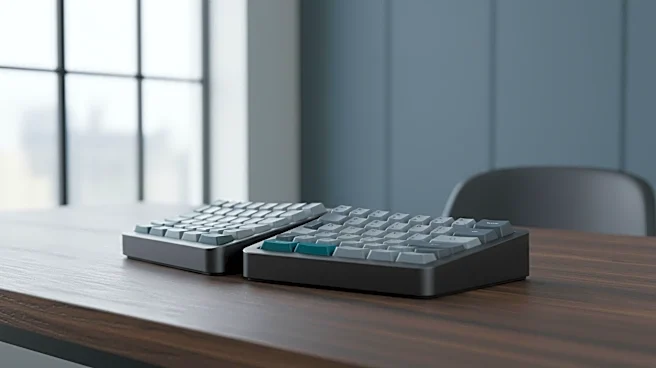
The first ergonomic keyboards didn't look like anything on the market. In the 1970s and 80s, pioneers like Maltron and Kinesis introduced devices that seemed alien. Keyboards were split in half, keys were sunk into contoured wells to match finger lengths, and common commands were moved to be accessible by stronger thumbs. These weren't sleek consumer gadgets; they were expensive, purpose-built medical tools designed to alleviate a specific type of physical stress. Companies like Maltron, founded in 1977, built their entire business on the claim that their unique 3D keyboards could be the solution to RSI.
The Small Business Proving Ground
While large corporations were often slow to adopt such strange hardware, small businesses became the perfect proving ground. They were agile enough to make targeted investments in employee health without layers of bureaucracy. If a key programmer, designer, or writer was sidelined by RSI, a small business owner could justify spending several hundred dollars on a Kinesis or Maltron keyboard to get them working again. This created a stable, premium market for ergonomic innovators. These small businesses weren't just buying a product; they were investing in a solution, providing the revenue and real-world feedback these niche manufacturers needed to survive and refine their designs.
From Health Tool to Performance Feature
The features honed in these niche business keyboards began to quietly leak into the mainstream, often rebranded for performance rather than just health. Mechanical key switches, prized in the ergo world for their light touch and tactile feedback, were adopted by the burgeoning PC gaming community for their speed and durability. The radical split-keyboard concept was softened and commercialized by giants like Microsoft with its Natural Keyboard in 1994, which introduced millions to the idea of a more comfortable typing posture. Even the hyper-customizable software that allowed users to remap every single key—a necessity for optimizing workflow on an ergonomic board—became a standard feature on high-end gaming and enthusiast keyboards.
The Quiet Revolution's Legacy
Today, the DNA of those early, odd-looking ergonomic keyboards is everywhere. It's in the gentle curve of a modern office keyboard, the mechanical switches in a gamer's setup, and the fully split, programmable keyboards favored by software developers. Concepts that were once medical interventions are now marketed as features for comfort, productivity, and performance. The revolution wasn't televised; it was integrated. The market for specialized tools, driven by the practical needs of small businesses, served as an incubator for ideas that were too radical for the mass market at the time but are now considered essential parts of modern hardware design.