








The Frustrating Reality of a 'Perfect' Hub
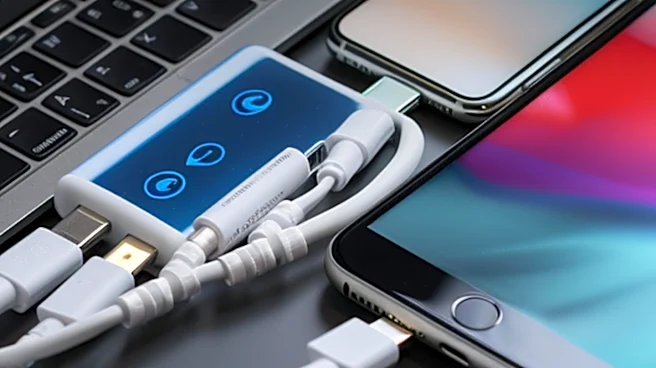
It’s a familiar story for anyone with a modern, port-stingy laptop. You buy a sleek USB-C hub that promises to solve all your connectivity problems. It has ports for your monitor, external hard drive, keyboard, mouse, and even an Ethernet cable. You plug
everything in, and for a moment, it feels like magic. Then, the chaos begins. Your 4K monitor starts flickering, transferring a large file from your SSD crawls to a halt, and your laptop, despite being plugged into the hub for charging, is slowly losing battery. You might blame your cables, your laptop, or the hub itself, assuming you got a dud. But the problem is usually something far more fundamental that manufacturers are not eager to advertise.
The Detail Reviews Miss: Shared Resources
The single most important detail that buyer's guides often miss is that a USB hub is not a magical box of infinite resources. Think of it like a single highway lane leading back to your computer. Every device you plug into the hub—your monitor, drive, keyboard—is a car that has to merge into that same single lane. All the ports on the hub share the total data bandwidth and the total power supplied by the one port it's plugged into. This shared limitation is the root cause of nearly all hub-related frustrations. Counting the number of ports is easy, but understanding the total capacity they all have to share is the key to buying a hub that actually works.
Decoding the Data Bottleneck
Most standard USB-C hubs connect to your laptop over a single USB 3.0 or 3.2 connection, which typically offers a total bandwidth of 5 or 10 gigabits per second (Gbps). That sounds like a lot, but it gets eaten up quickly. A single 4K monitor running at 60Hz can consume a significant chunk of that bandwidth. Add a fast external SSD that wants to transfer files at high speed, and you've likely maxed out the hub's data highway. The result? The hub's internal controller has to slow things down to prevent a crash, causing your monitor to flicker or your file transfer to become painfully slow. If a hub promises 10 Gbps speeds on multiple ports, remember that you can likely only use one of them at full speed at any given time. They all share the same upstream connection.
The Power Problem Isn't Just About Charging
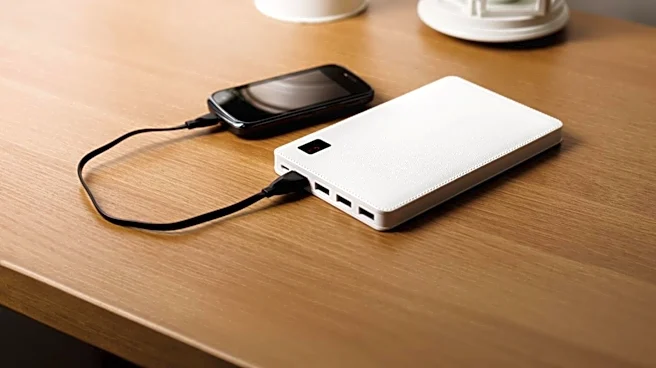
The second half of the equation is power. Hubs come in two main types: bus-powered (drawing power from the laptop) and self-powered (with their own AC adapter). Bus-powered hubs are convenient but have very little power to give. A single USB 3.0 port on a laptop provides only about 4.5 watts to share among all the hub's ports, which often isn't enough to reliably run an external hard drive, let alone multiple devices. Self-powered hubs are much better, but they still have limits. Many USB-C hubs advertise “100W Power Delivery (PD) Passthrough,” leading you to believe it delivers 100W to your laptop. In reality, the hub itself consumes power—often 10-15W—for its own electronics. That means a hub advertising 100W might only deliver 85W to your computer, which could be less than your laptop needs under heavy load, causing the battery to drain slowly even while plugged in.
How to Actually Buy a Good Hub
Instead of just counting ports, look for two key specifications. First, check the total upstream bandwidth. A hub with a 10 Gbps (often labeled USB 3.2 Gen 2) connection is significantly better than one with 5 Gbps. For ultimate performance, a Thunderbolt hub offers a massive 40 Gbps of bandwidth, which is enough to run multiple high-performance devices without compromise. Second, scrutinize the power specs. If you plan to run power-hungry devices like hard drives or charge your laptop, always choose a self-powered hub with its own AC adapter. Look at the wattage of that adapter—a 60W adapter can't magically supply 90W of power. Reputable brands are often more transparent about these limitations, providing clear data and power specifications instead of just vague marketing claims.