









It All Starts with a Switch
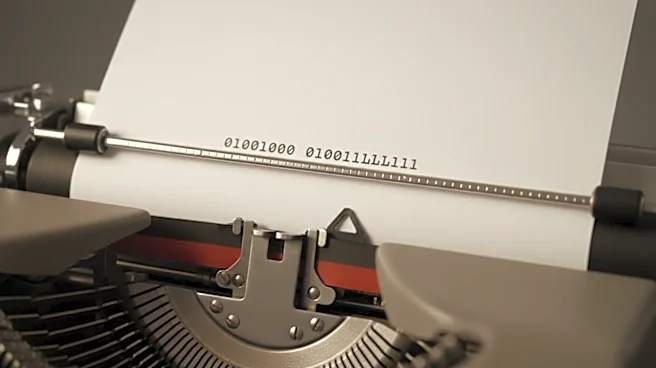
Before you can have a byte, you need a bit. A bit is the most basic unit of information in computing, a single electronic pulse that can be either on or off. Think of it as a light switch. It has only two states: 1 (on) or 0 (off). The term "bit" itself
is a shortened version of "binary digit," coined around 1947. A single bit doesn't convey much information on its own, but when you group them together, they become incredibly powerful. This grouping is where the byte comes in.
Taking a 'Bite' of Information
A byte is simply a collection of bits that a computer processes as a single unit. The name was coined in 1956 by IBM engineer Werner Buchholz, who was working on the company's Stretch supercomputer. He deliberately misspelled "bite" as "byte" to avoid it being confused with "bit." In the Wild West of early computing, however, there was no standard size for a byte. Different machines used different groupings—some had 6-bit bytes, others used 9-bit bytes, and some architectures didn't really have bytes at all, instead organizing memory into larger "words" of 12, 36, or even 48 bits. This created a chaotic environment where software written for one machine was incompatible with another.
Enter the Mainframe Giant
The turning point came on April 7, 1964, when IBM announced its revolutionary System/360 family of computers. This was a massive gamble for the company, intended to replace all its existing, incompatible computer lines with a single, scalable architecture. One of the most critical decisions the System/360 architects made was to standardize on the 8-bit byte. Fred Brooks, a lead architect on the project, later called it "the most important single decision I ever made." IBM's market dominance was so immense that its choice quickly became the de facto industry standard, forcing competitors to adopt the 8-bit byte to stay compatible.
Why Eight Was the Magic Number
So why eight? The decision was a masterclass in pragmatic engineering. First, 8 is a power of two (2^3), which makes the math behind memory addressing far more efficient for binary-based computers. But the killer application was text. An 8-bit byte can represent 256 different values (2 to the power of 8). This was the perfect amount of space to store a single character. Competing 6-bit systems could only handle 64 values, which was enough for uppercase letters, numbers, and some symbols, but not lowercase letters. The 8-bit standard comfortably fit the emerging ASCII character set (which used 7 bits) and IBM's own EBCDIC code, with room to spare for control characters and future expansion. This ability to handle both upper and lowercase text was a game-changer for business and scientific applications.
A Legacy Cast in Silicon
The standardization on the 8-bit byte had a profound and lasting impact. It enabled software to become portable across different machines, creating the foundation for a modern software industry. It paved the way for the 8-bit microprocessors of the 1970s, like the Intel 8080, which kicked off the personal computer revolution. Today, even our sophisticated 64-bit computers are still built on this fundamental principle of byte-addressable memory, where every character, pixel, and command has its own unique address in a vast sea of 8-bit chunks. What started as a practical choice for a line of mainframes became the universal building block of the digital age, a standard so successful that we barely even think about it.