






It Takes an Array to Raise a Voice
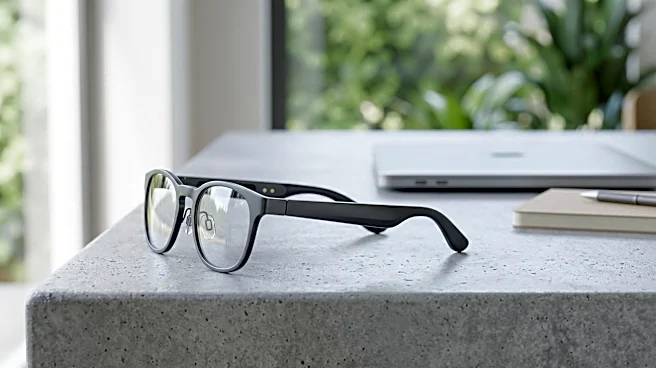
When you ask your AI glasses to send a message, you’re not just speaking to a single, tiny microphone. You’re speaking to a team. Modern smart glasses don’t rely on one microphone; they use a sophisticated array of them, often five or more, embedded along
the frames. A single mic is “omnidirectional,” meaning it hears equally from all directions. In a quiet room, that’s fine. But on a city street or in a bustling cafe, your voice becomes just one more sound in a sea of noise. An array, however, allows the glasses to perform a neat trick called beamforming.
Creating a 'Laser Beam' for Sound
Think of beamforming as creating a virtual spotlight for sound. Because the microphones are in slightly different positions, the sound from your mouth hits each one at a fractionally different time. On-board processors analyze these microscopic delays to calculate exactly where your voice is coming from. The system can then electronically “steer” its sensitivity, creating a cone of focused listening aimed directly at your mouth while actively suppressing sounds from other directions, like traffic or a nearby conversation. This is how the glasses solve the “cocktail party problem” on your face, isolating your commands from the acoustic clutter of the world.
The Geometry of a Good Listener
This is where placement becomes everything. The effectiveness of beamforming depends entirely on the physical distance and orientation of the microphones. It’s a game of geometry. Engineers need to space the microphones far enough apart to get meaningful time-difference data, which is a challenge on a device as small as a pair of glasses. Placing microphones on both the front and back of the temple arm, for example, creates what’s known as an “end-fire” array. This setup is particularly effective because it uses your own head as a natural acoustic shield, blocking sounds from behind and helping the array focus on your voice. Some designs even incorporate bone conduction sensors, which pick up the vibrations of your voice through your skull, to further distinguish it from airborne noise.
The Difference Between Magic and Misery
When this intricate design is done right, the result feels like magic. Your calls are clear even on a windy day, and your AI assistant catches your every word. But when the placement is poor, the entire experience falls apart. Badly positioned mics can’t effectively cancel out wind, which strikes the microphone diaphragm and creates a low-frequency rumble that’s impossible to remove later. This results in the AI constantly saying, “Sorry, I didn’t get that,” and people on calls complaining you sound distant or garbled. The software can’t fix a problem created by bad hardware physics. The user is left with a frustrating, unreliable gadget, and the “smart” glasses become profoundly dumb.