









Not Your Parents' Satellite Dish
For decades, 'satellite internet' meant a bulky dish and a connection that was, at best, a last resort. Those signals traveled from huge, school-bus-sized satellites parked 22,000 miles away in geostationary (GEO) orbit. That massive distance creates
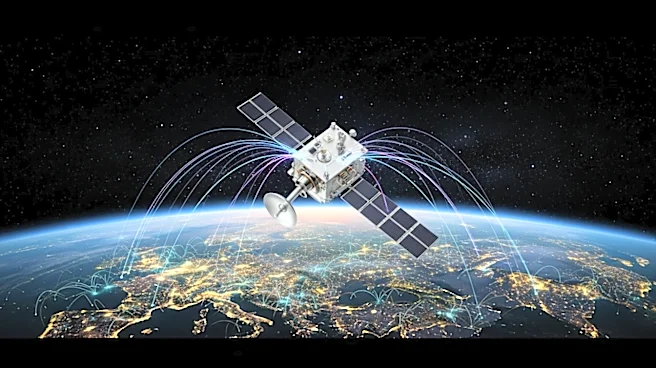
a noticeable lag, or latency, making real-time applications like video calls or online gaming a frustrating experience. Low-earth orbit (LEO) satellites change the game entirely. Flying just a few hundred miles above the Earth, they drastically cut that signal travel time. This proximity reduces latency to levels comparable with ground-based fiber and cable, transforming satellite connectivity from a slow backup to a high-performance primary option. Instead of one giant satellite, LEO systems use 'constellations' of thousands of smaller, coordinated satellites that act like a mesh network in the sky, handing off your signal from one to the next to ensure a continuous link.
A New Billionaire Space Race
This technological leap has ignited a fierce commercial rivalry, primarily between SpaceX's Starlink and Amazon's Project Kuiper, with the UK-based OneWeb also a major player. Starlink, the current frontrunner, has already deployed thousands of satellites and offers services in over 100 countries, targeting consumers in rural and underserved areas. Amazon's Project Kuiper is leveraging its massive cloud infrastructure (AWS) and logistics empire to build a competing ecosystem. OneWeb, meanwhile, has focused on enterprise and government clients, providing global coverage for industries like aviation and maritime. This isn't just a contest to sell internet subscriptions; it's a strategic battle to build and control the next generation of global infrastructure, with billions of dollars being invested to launch and maintain these vast orbital networks.
The Unseen Network Backbone
While connecting rural homes gets the headlines, the truly revolutionary work of LEO satellites happens more quietly. They are rapidly becoming a critical, redundant backbone for our existing networks. For businesses, LEO offers a powerful failover solution; if a construction crew cuts a fiber line in a city, a business can switch to its satellite link and continue operating without costly downtime. Airlines are using it to provide reliable, high-speed inflight Wi-Fi. Shipping companies track vessels at sea, energy firms monitor remote pipelines, and farmers use it for precision agriculture in areas with no cell service. In disaster zones where terrestrial infrastructure is damaged, LEO provides an instant communication lifeline for first responders. These satellites are also being integrated to provide 'cellular backhaul,' helping major carriers extend their 4G and 5G networks to previously unreachable locations.
The View From Orbit Isn't Perfect
The rapid deployment of tens of thousands of satellites isn't without significant challenges. The primary concern is space debris. With LEO becoming increasingly crowded, the risk of collisions grows. A single collision could create thousands of pieces of high-velocity shrapnel, threatening other satellites in what's known as the Kessler Syndrome. International bodies and operators are working on debris mitigation strategies and space traffic management, but the risk is real. Astronomers have also raised concerns about light pollution from these constellations, which can interfere with observations from ground-based telescopes. As companies race to secure orbital slots and spectrum rights, regulators are scrambling to ensure the long-term sustainability and safety of this vital new frontier.