




Dario Amodei, CEO of Anthropic
If you admire Suleyman's commitment to AI safety, Dario Amodei is essential reading. Like Suleyman, Amodei is an alum of a major AI lab (he was VP of Research at OpenAI) who left to build a company with safety as its core premise. In 2021, he and his
sister Daniela co-founded Anthropic as a public benefit corporation explicitly focused on creating reliable, interpretable, and steerable AI. While Suleyman integrated ethics into DeepMind and Inflection AI, Amodei built his entire company, Anthropic, around the concept, most famously through 'Constitutional AI'—a method for baking principles directly into a model's design. For those who see the necessity of guardrails in the race to AGI, Amodei represents the most direct philosophical successor to the principles Suleyman championed.
Reid Hoffman, Co-founder of LinkedIn & Inflection AI
To understand the 'Suleyman model', you have to understand his collaborators, and none are more important than Reid Hoffman. The legendary entrepreneur and investor co-founded Inflection AI with Suleyman, but their connection runs deeper. Hoffman’s entire career, from PayPal to LinkedIn and his investments in Facebook and Airbnb, has been built on a philosophical approach to how technology shapes human networks and society. He is the archetypal 'thinker-founder', weaving insights from philosophy into practical business and leadership strategy. Like Suleyman, who dropped out of Oxford to pursue social impact work, Hoffman blends academic rigor with real-world execution. Studying Hoffman reveals the intellectual ecosystem that Suleyman thrives in, where big ideas about humanity directly inform product development.
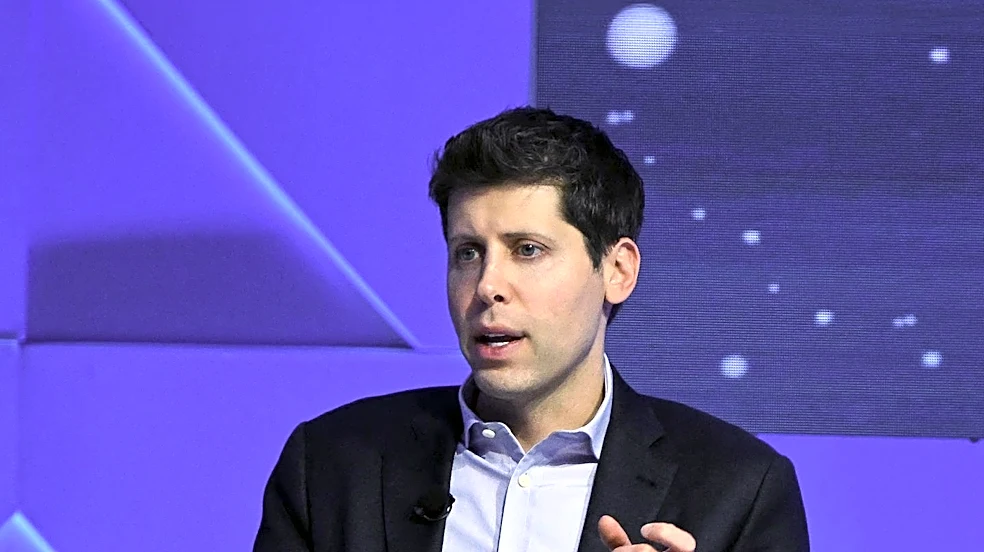
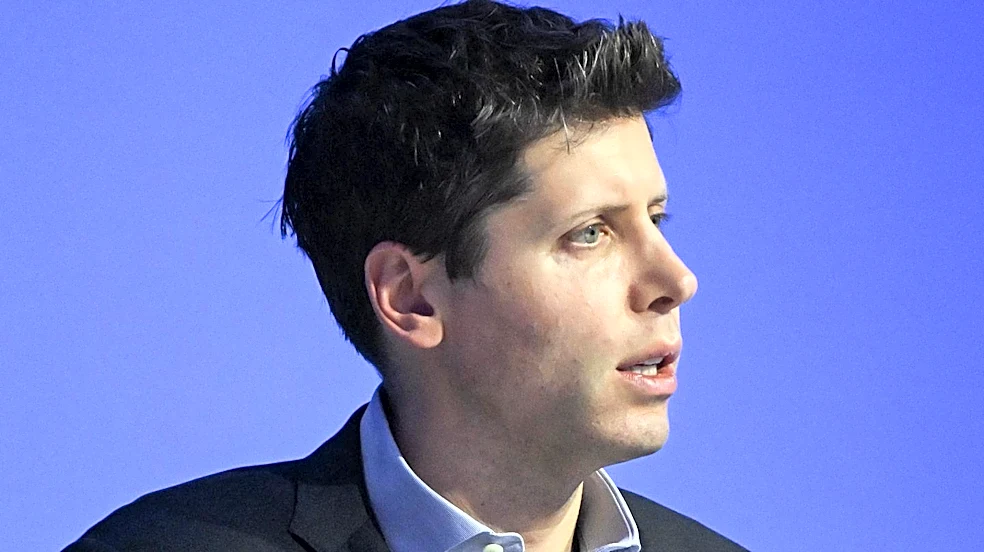
Sam Altman, CEO of OpenAI
While their styles differ, Sam Altman shares Suleyman’s trajectory of scaling a research project into a world-changing force while publicly navigating its immense risks. Altman transformed OpenAI from a non-profit research lab into the entity that launched ChatGPT, making him a central figure in the global AI conversation. He constantly balances evangelizing AI's potential to uplift humanity with stark warnings about its dangers, such as the concentration of power and the need for human control. This duality mirrors Suleyman's work in his book 'The Coming Wave', where he describes himself as a tech optimist deeply concerned with catastrophic risk and dystopia. If Suleyman represents the philosopher-founder, Altman is the strategist-statesman, grappling with the same monumental stakes on a global stage.
Demis Hassabis, CEO of Google DeepMind
You can't fully appreciate Suleyman without understanding his original partner, Demis Hassabis. The two childhood friends co-founded DeepMind with Shane Legg, but their paths diverged. While Suleyman focused on applied AI and its societal impact, Hassabis remained the pure scientist, driving the mission toward artificial general intelligence (AGI) as a tool to solve humanity's biggest scientific problems. Their dynamic—the humanist and the scientist—was foundational to DeepMind’s identity. Today, they lead rival AI divisions at Microsoft and Google, respectively, representing two different philosophies born from the same origin story. Studying Hassabis provides a crucial contrast, highlighting the specific focus on ethics and human-computer interaction that defines Suleyman's unique legacy.
Jensen Huang, CEO of Nvidia
Mustafa Suleyman builds AI models; Jensen Huang builds the universe they live in. While not an AI ethicist in the same vein, the Nvidia co-founder is a masterclass in long-term, visionary thinking. Huang's genius was recognizing, years before anyone else, that the GPUs built for gaming could power a computational revolution. This led to the creation of CUDA, the software platform that unlocked the AI boom and made companies like DeepMind possible. His strategic approach involves identifying 'zero-billion-dollar markets'—nascent fields with massive potential—and building the foundational tools they will inevitably need. For anyone who admires Suleyman's ability to see where the world is going, Huang offers a different but equally powerful lesson: don't just build the product, build the platform the entire future will be built upon.