
1. The Evolution of On-Device AI
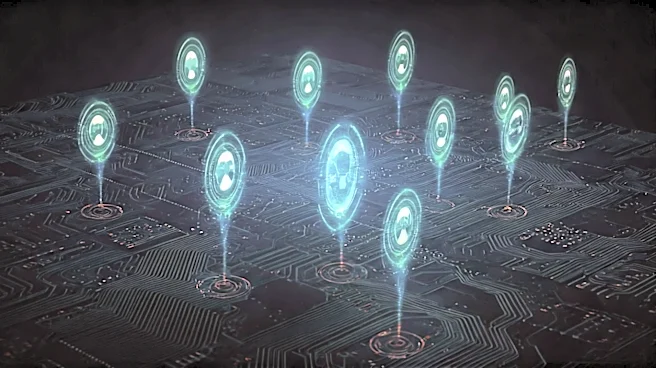
By 2026, Apple's push for private, on-device artificial intelligence won't be new. The key signal for developers will be the sophistication of the tools. Forget simple predictive text; we're talking about
frameworks that allow apps to perform complex, multi-step reasoning without ever hitting a server. Watch for APIs that give developers access to personalized, context-aware AI models that are unique to each user but remain completely sandboxed for privacy. The real question is how much processing power Apple's silicon can dedicate to this, and how much control developers get over the models.
2. Vision Pro's 'Open' Moment
After a few years on the market, the Vision Pro (or its successor) will need to move from a niche device to a true platform. The developer signal to watch for is a significant opening of VisionOS. Will Apple grant developers lower-level access to the array of sensors that power its spatial computing magic? A new API for advanced hand-tracking, world-mapping, or eye-tracking could unleash a wave of innovation that proprietary apps can't. This would signal Apple's confidence in the platform and its desire to build a killer app ecosystem beyond its own.
3. SwiftUI as the One True Framework
Apple has been patiently nudging developers toward its declarative UI framework, SwiftUI, for years. By 2026, the push could become a shove. The signal won't just be new features for SwiftUI, but what Apple *deprecates*. Listen for any announcements that put older frameworks like UIKit (for iOS) and AppKit (for macOS) on a clear path to retirement. If Apple releases a major new OS feature that is only accessible through a SwiftUI API, that's the ultimate signal that developers who haven't made the switch are being left behind.
4. A Post-Tracking Advertising Model
Apple’s war on user tracking will have reshaped the digital advertising landscape by 2026. With App Tracking Transparency a distant memory, developers need new ways to monetize and grow. The signal will be a new, privacy-preserving business intelligence framework. Look for Apple to offer developers aggregated, anonymized analytics tools that provide deep insights into user behavior without compromising a single individual's data. This would be Apple’s attempt to solve the monetization puzzle it helped create, keeping the App Store economy healthy.
5. The Unified OS Core
For years, developers have built apps for iOS, macOS, watchOS, and now VisionOS. The signal to watch for is how much those lines continue to blur at a fundamental level. Are there new, universal APIs that work seamlessly across every device? Is there evidence of a single, scalable OS kernel that simply presents a different user interface depending on the hardware? This would be the holy grail for developers, promising a 'write once, run anywhere' future that Apple has been inching toward since the first iPhone.
6. A Serious Play for AAA Gaming
Apple Arcade is a nice service, but Apple wants a bigger piece of the $200 billion gaming industry. By 2026, its hardware will be more than capable. The signal developers and publishers need is commitment. Watch for a next-generation graphics API beyond Metal, designed specifically to compete with Microsoft's DirectX and the open-source Vulkan. If Apple also announces developer porting kits that make it radically simpler to bring AAA titles from Windows to the Mac and Vision Pro, it signals they’re finally ready to treat gaming as a core platform pillar.
7. HealthKit Becomes a Diagnostic Tool
Apple devices are already powerful wellness trackers. The next leap is into diagnostics. With an aging population and ever-more-sophisticated sensors, the signal to watch for is FDA-cleared APIs. If Apple provides developers with frameworks that have pre-cleared regulatory pathways for building diagnostic tools—for things like atrial fibrillation follow-ups or sleep apnea screening—it would transform the Apple Watch and iPhone into indispensable clinical devices and open a massive new market for health-tech developers.
8. The App Store's New Reality
Years of regulatory pressure in the U.S. and Europe will have forced changes to Apple's walled garden. The key signal at WWDC 2026 won't be a dramatic mea culpa, but a pragmatic evolution of its developer tools. Look for new APIs designed to manage app distribution and payments *outside* the official App Store. Apple’s goal will be to provide a secure, if reluctant, pathway for sideloading while maintaining as much control as possible. The details of these tools will reveal Apple's long-term strategy for living in a more open ecosystem.
9. Declarative Server-Side Swift
Apple's 'declarative' philosophy—describing *what* you want, not *how* to do it—is the foundation of SwiftUI. The next frontier is the server. The signal to watch for is a major investment in server-side Swift, positioned as a modern alternative to Node.js or Go. A new, declarative framework for building backends could make it incredibly simple for Apple's millions of developers to build full-stack applications entirely within the Swift ecosystem, further locking them into Apple's world, from the front-end UI to the back-end logic.