





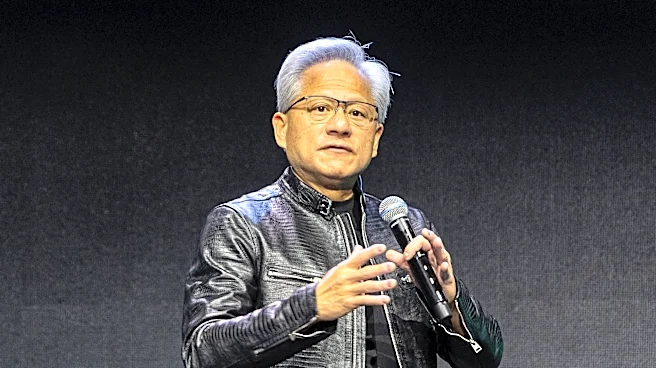
Nvidia is currently caught in a perfect storm of leadership upheaval and extreme market demand. As Black Friday approaches, the sudden reinstatement of Jensen Huang adds a layer of chaos to an already volatile GPU market.
A sudden leadership pivot
The tech world was rocked on November
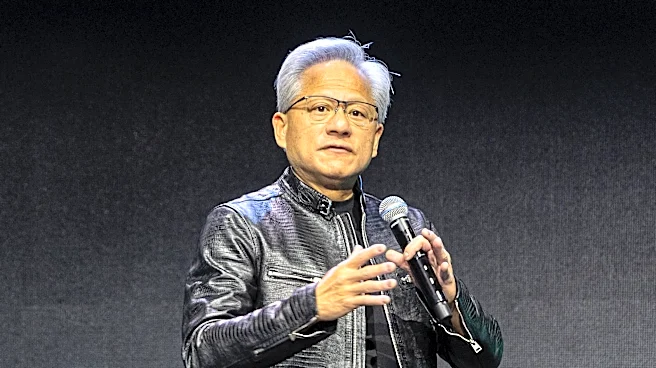
23, 2026, when Nvidia announced that Jensen Huang was being reinstated as president, CEO, and board member, effective immediately. This move follows a period of significant turbulence for the company, including Huang's recent resignation. While the board's decision to bring him back was unanimous, the announcement was strictly about leadership. There were no mentions of product roadmaps, price adjustments, or changes to the supply chain. For the casual consumer looking at a Black Friday deal, the news is more about the stability of the company than the cost of a graphics card, but in the high-stakes world of semiconductor manufacturing, leadership shifts often signal future shifts in strategy.
The AI demand bottleneck
If you are wondering why a high-end graphics card costs more than a used car, the answer isn't found in the CEO's office, but in the massive data centers powering the global AI revolution. The current shortage of high-end GPUs is being driven by an insatiable demand for memory. Specifically, the DRAM and VRAM required for AI processing are being pulled away from consumer gaming products to satisfy the needs of massive AI clusters. This has created a massive gap between the manufacturer's suggested retail price (MSRP) and the actual street price. Recent reports indicate that graphics cards have been averaging roughly 44 percent above MSRP, with prices climbing steadily throughout the final quarter of 2026.
Decoding the Black Friday price tags
Looking at the current landscape, the numbers are staggering. For those eyeing the flagship RTX 5090, the launch MSRP was set at $1,999, yet recent trackers show street prices hovering around $6,549. That is more than triple the original intended price. Even mid-range options like the RTX 5070 are seeing prices nearly 60 percent above their launch MSRP. While Black Friday is traditionally a season of deep discounts, the current reality is that a 'sale' might simply mean a card is slightly less overpriced than it was last week. When evaluating a deal, it is vital to compare the current price against the original MSRP rather than just the previous week's price, as the baseline has shifted significantly due to supply constraints.
Should you buy or wait?
The big question remains: is it time to pull the trigger? The data suggests there is no easy answer. On one hand, Nvidia executives have previously warned that gaming GPU supply would remain tight for several quarters, and memory pricing is expected to remain extreme. This suggests that waiting might not lead to the windfall of savings many shoppers hope for. On the other hand, there is no official word from Nvidia regarding Black Friday price cuts. Unless you are facing a critical hardware failure or a specific professional need, the current market is a gamble. The only certainty is that the supply-demand imbalance created by the AI boom is not going away anytime soon.