




An Unprecedented Gamble
In 2002, Elon Musk founded SpaceX with a vision that seemed borderline absurd: to dramatically reduce the cost of spaceflight and make humanity a multi-planetary species. After selling his stake in PayPal, he invested around $100 million of his own money
into this new venture. This wasn't just seed funding; it was the lifeblood of the company, intended to cover the immense costs of designing, building, and launching a rocket from scratch. The goal was to prove that a private company could do what only nations had done before: reach Earth's orbit. The plan was aggressive, and the budget was finite. The initial capital was expected to be enough for three launch attempts with its first rocket, the Falcon 1.
Three Strikes and the Money Runs Out
The path to orbit proved more painful than imagined. SpaceX's first three attempts to launch the Falcon 1 all ended in failure. In March 2006, an engine fire caused the first rocket to crash just seconds after liftoff. A year later, in March 2007, the second attempt reached space but spun out of control before achieving a stable orbit. The third failure, in August 2008, was perhaps the most heartbreaking. The first stage performed well, but a design flaw caused it to collide with the second stage after separation, destroying the vehicle. With each explosion, the company's funds dwindled. After the third failure, the money was nearly gone. Musk had personally bankrolled the dream, and now both he and his company were staring into a financial abyss.
The Final Bet
The year 2008 was, in Musk's own words, the "worst year of my life." The global financial crisis was raging, making outside investment virtually impossible. At the same time, his other major venture, Tesla, was also hemorrhaging cash and teetering on the edge of bankruptcy. Personally, Musk was going through a divorce and was so low on funds that he reportedly had to borrow money from friends. He was forced to make a harrowing choice: split his remaining capital between SpaceX and Tesla, or let one die to save the other. He chose to split the money, a decision that could have easily resulted in both companies failing. SpaceX had just enough cash for one last launch attempt. If the fourth Falcon 1 launch failed, the company was finished.
From the Brink to the Stars
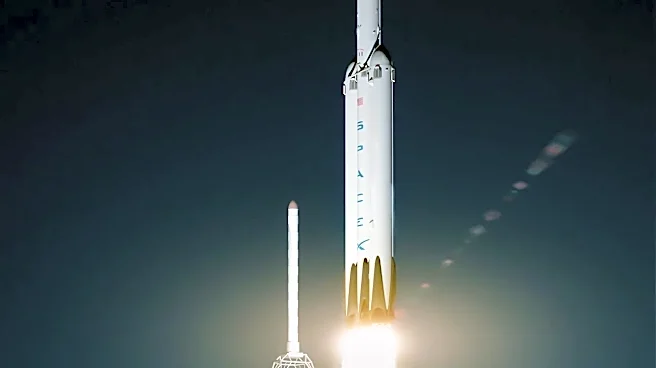
On September 28, 2008, everything rode on the fourth flight of the Falcon 1. Liftoff occurred from a remote island in the Pacific Ocean, and the small team watched as their final hope climbed into the sky. This time, there was no explosion, no spin, no collision. The rocket performed flawlessly, becoming the first privately funded, liquid-fueled vehicle to reach Earth orbit. The success was a monumental technical achievement, but the company's survival was still not guaranteed. The true lifeline came just a few months later. In December 2008, NASA awarded SpaceX a $1.6 billion Commercial Resupply Services (CRS) contract to fly cargo to the International Space Station. That contract, awarded on the heels of its do-or-die launch, saved the company and transformed it from a struggling startup into a credible aerospace contractor.